At Michigan State University, students, staff and faculty enjoy an expansive 5,200 acres of beautiful campus space every day. Whether you are traveling to campus from another corner of the state, or simply trying to make it to your 10:20 a.m. class on time, traveling the distance can get tricky. Thankfully, MSU has many convenient and sustainable transportation options for all.
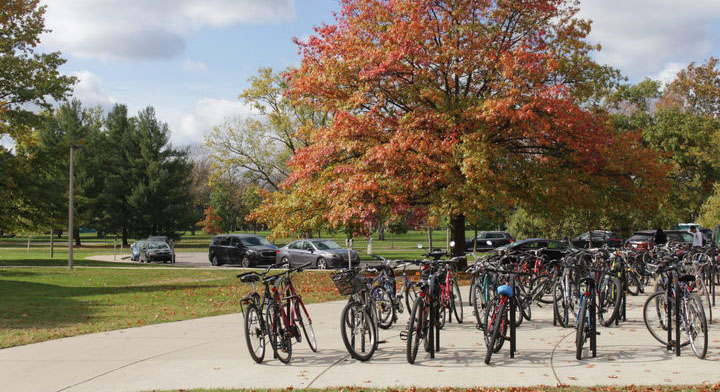
Biking is a healthy and environmentally-sustainable transportation option for the MSU community. With more than 70% of its roads equipped with bike lanes and more than 20,000 bicycle parking spaces, MSU has been named a Gold-Level Bicycle Friendly University by the League of American Bicyclists. Visit MSU’s Bikes Service Center or follow MSU Bikes Blog for tips on bike safety, bike security and to learn more about the bike resources offered on campus.
Additionally, MSU has installed several bike repair DIY stations across campus, providing cyclists with a place to fix flats and make minor adjustments. The stations are located at Phillips, Holden, Brody and Yakeley halls, and can also be found at the Bikes Service Center and bike garages located in the Grand River Avenue Ramp and Communication Arts and Sciences Ramp. View bicycling amenities on this map.
Using the Capital Area Transportation Authority (CATA) bus system
The Capital Area Transit Authority (CATA) bus system is easily-recognizable both on and off campus. For faculty and staff heading to meetings or students hurrying to class, CATA offers safe, reliable transportation. Bike racks are available on all CATA buses for passenger use; no additional fares apply. Additionally, CATA’s Clean Commute Options program offers many more options beyond great bus transit. CATA provides free on-campus bus service for students, faculty and staff.
Not sure how to use the bike racks on a CATA bus? The Shaw Lane Bus Depot has a practice rack. Watch the video below to learn how to use it.
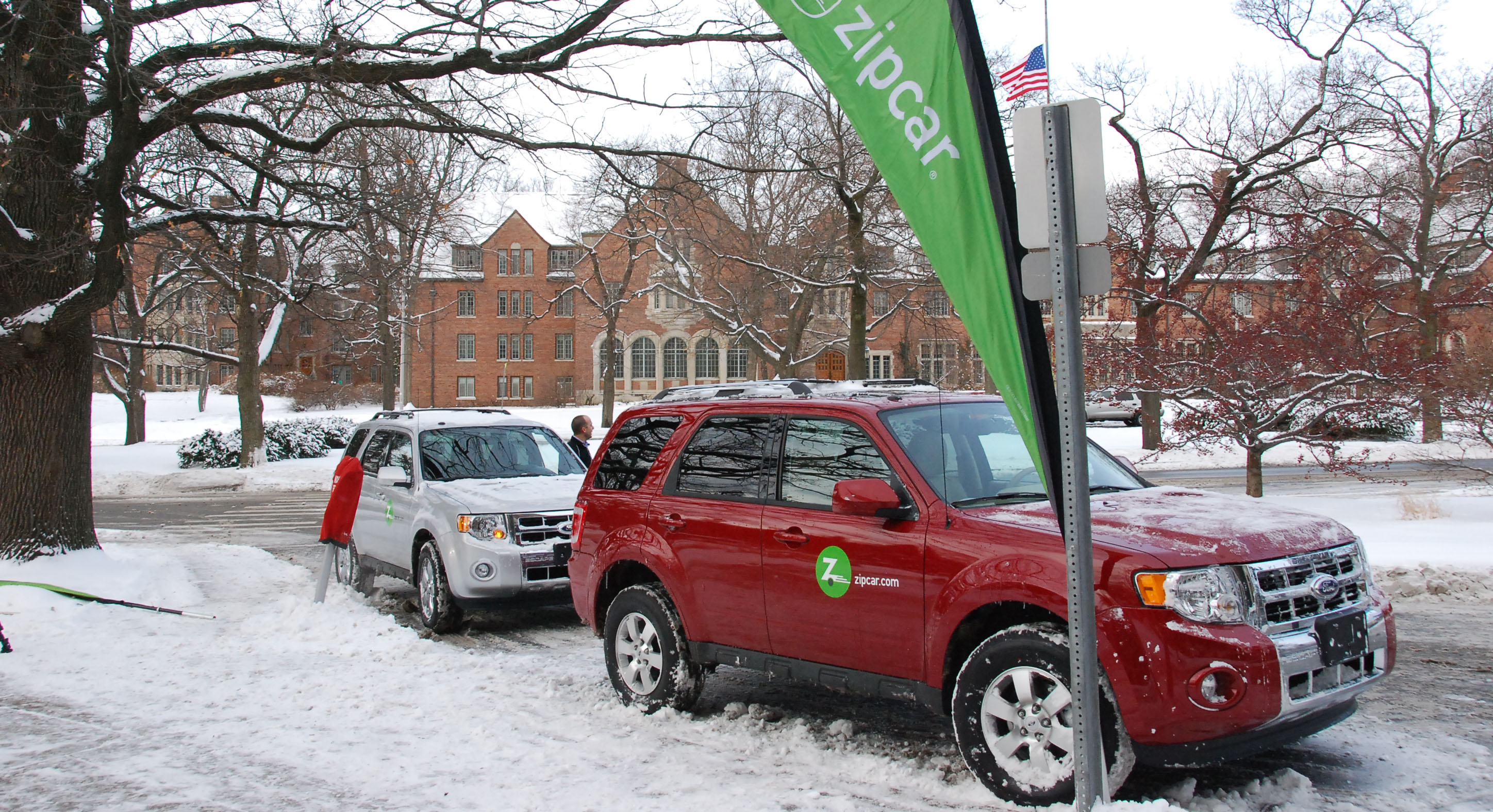
MSU has partnered with Zipcar to promote carpooling and the use of mass transit. The program, which launched January 12, 2011, put seven pods on campus with nine cars available for students, faculty and staff to reserve and use.
MSU offers a discounted parking permit for registered carpoolers. The cost of the permit is $24.50 per month per person or $294 per person if paid in-full. Each individual using the permit can decide if they’d like their portion of payment to be prepaid or payroll deducted monthly. This permit must be purchased in person at the parking office.
Additionally, Enterprise has partnered with MSU to provide a Rideshare vanpooling service for commuters at the university. Visit their website to learn about rates and the application process.
Michigan also offers a Guaranteed Ride Home Program, which helps commuters make it home after work.
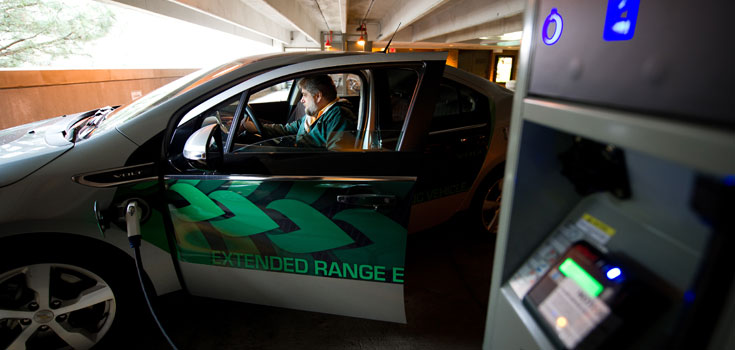
MSU Transportation Services offers faculty and staff a handful of green vehicles available for rent by university departments to use for errands and events around campus. To reserve a vehicle, call the Transportation Services office. For those with their own electric vehicles, MSU has 13 charging stations around campus, including four in the south Spartan Stadium parking lot and one in the Kellogg Center parking ramp.
Transportation, including commuting behaviors and the university fleet, is a key focus area in MSU’s efforts to reduce its carbon footprint.
Approved in 2023, the Vision 2050 Facilities and Land Use Plan, analyzed mobility and circulation patterns across campus. Based on findings, the plan identified a number of strategies to reduce reliance on single-occupancy vehicles, prioritize pedestrian access, and improve campus connectivity. This includes:
Increasing frequency and coverage of CATA bus service to better connect campus, including improving shuttle service to peripheral parking areas
Limiting vehicular access for portions of central campus
Re-envisioning Red Cedar Road as a pedestrian promenade
Replacing surface lots in the campus center with nearby parking structures
Completed the Farm Lane Bridge Reconstruction project in 2024. This included building a new pedestrian bridge completed in 2023 to avoid impeding foot and bike traffic at this critical campus location while the bridge was replaced.
Began road and utility construction for portions of Farm Lane, from Wilson Road to North Campus. When complete, the project will deliver a continuous bike lane stretching from Mt. Hope to Grand River, representing a major step forward in building a safer and more connected bicycling infrastructure.
The Department of Police and Public Safety added 10 new police bikes to support sustainable campus patrolling.
Improved bicycle registration system with rollout of MSU Bike Index.
Installed new bike racks and curb cuts at the renovated School of Packaging in 2023, improving access between bike lanes and bike parking areas.
Measuring Transportation Commuting Behavior and Environmental Impact
Emissions Data: Annual greenhouse gas emissions from commuting and fleet operations are reported annually through the 2030 Strategic Plan. See the Transportation Data tab for more information.
In FY22, the university fleet made up roughly 0.9% of the university's scope 1 emissions. MSU has committed to expanding its electric vehicle fleet by nearly 370 vehicles by 2030 as part of the implementation of the MSU 2030 strategic plan. The conversion will decrease the university’s overall carbon footprint by 18,945 metric tons of carbon dioxide long-term – the equivalent of planting 312,584 trees. As of May 2023, MSU has brought 47 electric vehicles into the university fleet and installed 52 non-public electric vehicle chargers to assist with this transition. See "Sustainable Transportation Resources" for more information about public charging stations.
Commuting
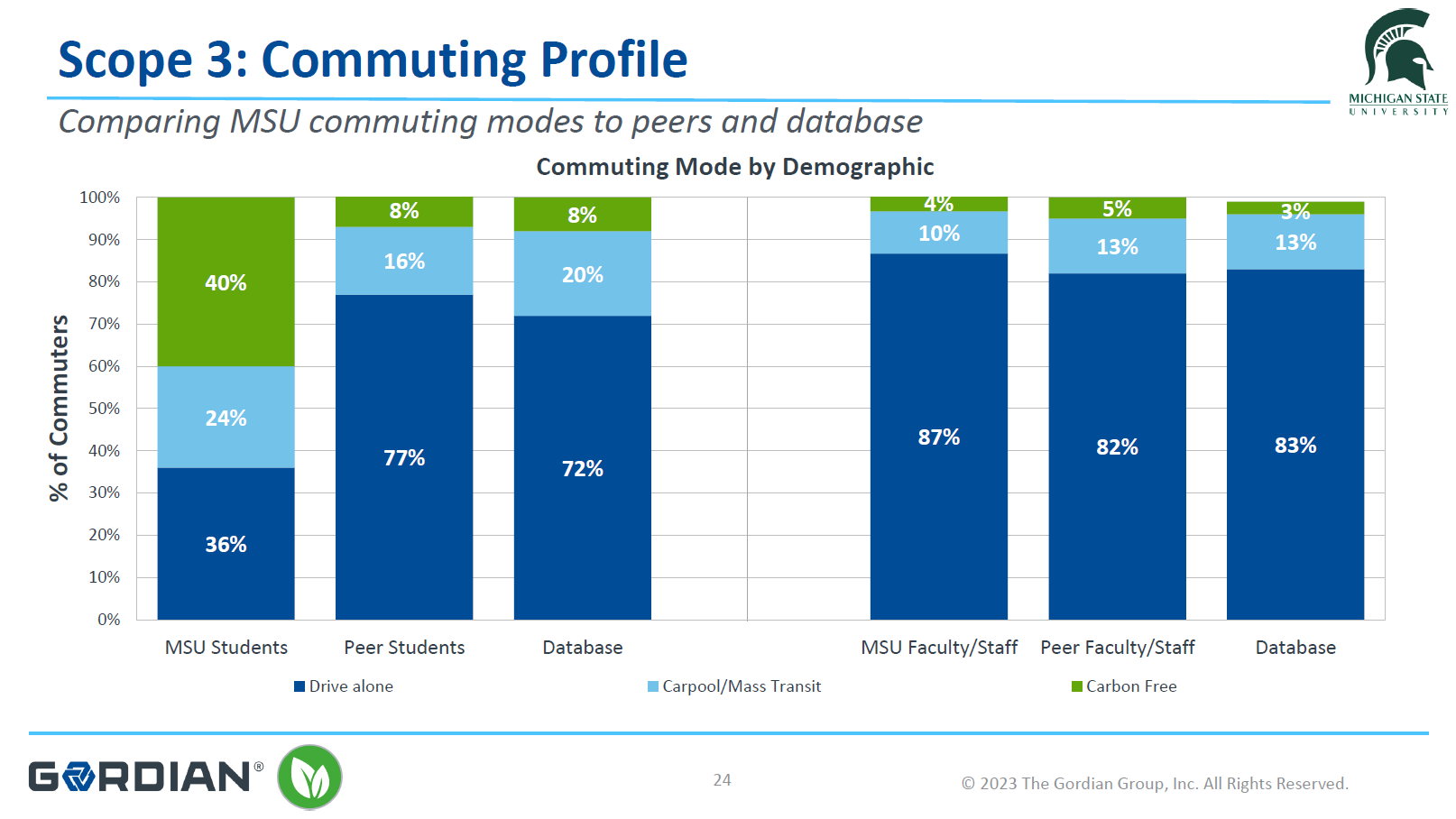
In FY22, commuting made up approximately 35% of the university's scope 3 emissions. Informed by a commuter survey, 36% of MSU students drive alone when commuting to campus, 24% carpool or take the bus and 40% walk or bike. For MSU faculty and staff, roughly 87% of employees commute to campus driving alone, while 10% carpool or take the bus, and 4% walk or bike. MSU is encouraging sustainable commuting to campus by supporting expansion of the regional trail system in the Lansing area. This includes working closely with Meridian Township on the new Lake Lansing Trail to MSU which will connect the Lansing River Trail, MSU's campus, and the Ingham County Parks at Lake Lansing. The trail is nearing completion as of October 2023, allowing people to use safely use non-motorized transportation to travel between campus and the west side of Meridian Township near Foods for Living.