Jump to HeaderJump to Main ContentJump to Footer
Michigan State University
Sustainability

Sustainability

  • About
    • Staff and Partners
    • Progress
    • Greenhouse Gas Reporting
    • Pollinator Friendly Campus
    • Stars
    Pack-up

    Sustainable Living

    How to Recycle on Campus
  • |
  • Academics
  • |
  • Campus
    • Energy
    • Sustainable Food
    • Sustainable Living: Saving Energy
    • Transportation
    • Gardens and Natural Areas
    • MSU Gardens
    • Red Cedar River
    • Water
    • How to Recycle on Campus
    • Quick Tips to Reduce Waste
    • Recycling and Reuse
  • |
  • Donate
  • |
  • Events
  • |
  • Get involved
    • Faculty and Staff
    • Students
    • Campus Sustainability Student Projects Fund
    • Eco Rep
    • Job Resources
    • Leadership Council
    • Student Groups
    • Take the MSU Sustainability Pledge
  • |
  • Resources
    • Green Your Tailgate
    • Move In/Out Day
    • Plan a Sustainable Event
Sustainability
  • About
  • Academics
  • Campus
  • Donate
  • Events
  • Get involved
  • Resources

< About

  • Staff and Partners
  • Progress
  • Greenhouse Gas Reporting
  • Pollinator Friendly Campus
  • Stars
Pack-up

Sustainable Living

How to Recycle on Campus

< Academics

< Campus

  • Energy
  • Sustainable Food
  • Sustainable Living: Saving Energy
  • Transportation
  • Gardens and Natural Areas
  • MSU Gardens
  • Red Cedar River
  • Water
  • How to Recycle on Campus
  • Quick Tips to Reduce Waste
  • Recycling and Reuse

< Donate

< Events

< Get involved

  • Faculty and Staff
  • Students
  • Campus Sustainability Student Projects Fund
  • Eco Rep
  • Job Resources
  • Leadership Council
  • Student Groups
  • Take the MSU Sustainability Pledge

< Resources

  • Green Your Tailgate
  • Move In/Out Day
  • Plan a Sustainable Event
Sustainability > Campus > Water >

Red Cedar River

Red Cedar River

Michigan State University

Resources

  • Electric Vehicle Charging Stations
  • Energy on Campus
  • LiveOn: Sustainability Information
  • MSU Bikes Service Center
  • MSU Recycling Center
  • MSU Student Organic Farm
  • MSU Surplus Store
  • Plan a Sustainable Event
  • Water Bottle Filling Stations
  • W.J. Beal Botanical Garden

Get Involved

  • Campus Sustainability Student Projects Fund
  • Eco Reps
  • Job Resources
  • Leadership Council
  • Student Groups

Campus

  • How to Recycle on Campus
  • MSU Gardens
  • Red Cedar River
  • Sustainable Living: Saving Energy
  • Rankings and Assessments
  • Staff & Partners
  • Sustainable Food
  • Transportation

Address

Michigan State University 426 Auditorium Road, Room 412 East Lansing, MI 48824

Releases and Statements

Follow Us

  • Visit our Instagram page
  • Visit our Facebook page
  • Visit our LinkedIn page
  • Visit our YouTube page

If you're having accessibility issues, please let us know.

Know MoreTransparency Reporting: Budget & Salary/Compensation
Michigan State University
  • Contact Information|
  • Site Map|
  • Privacy Statement|
  • Site Accessibility|
  • Call MSU: (517) 355-1855|
  • Visit: msu.edu|
  • Notice of Nondiscrimination|

SPARTANS WILL|© Michigan State University|

red-cedar-river

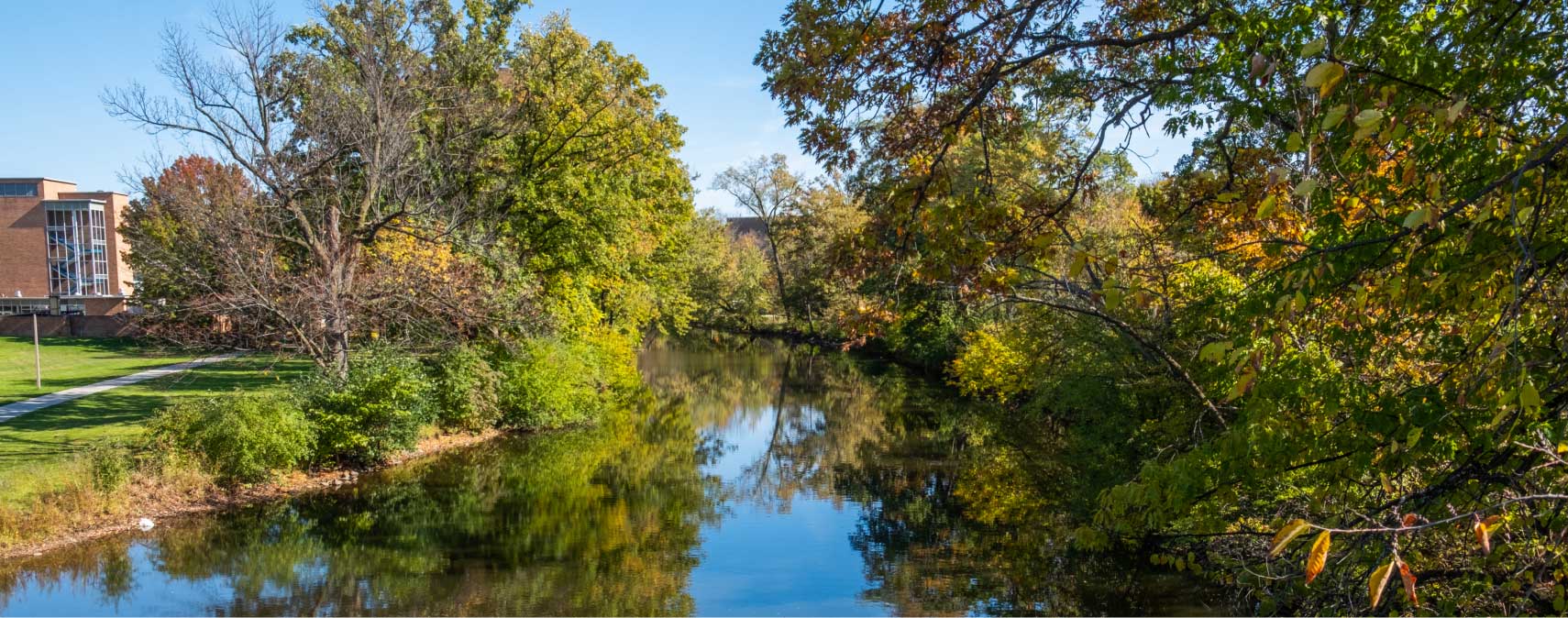
Roughly 3 miles of the Red Cedar River flow through Michigan State University's campus, providing habitat for a variety of fish and wildlife, offering a special space for the Spartan community to relax and recreate, and serving as a living laboratory for education and research. Michigan State University partners are working together to protect and promote this precious resource through 5 key areas:

  • Restoration
  • River Stewardship and Restoration


    Riverbank restoration

    MSU Landscape Services has an ongoing riverbank restoration project to reduce erosion. The first phase was completed in 2021 along the south bank of the river between the Sparty statue to the Library Bridge. The second phase is planned for 2025 north of Spartan Stadium.

    Beal Garden is also working to restore the riverbank along the north side of the river by the garden. The garden has installed barriers to reduce foot traffic along the river bank and is also creating habitat for endangered bats and birds by leaving dead trees standing when safe.


    River clean ups

    MSU partners host a number of river clean up events each year, including the long-running clean up by the MSU Fisheries and Wildlife Club. Infrastructure Planning and Facilities began hosting bi-annual cleanups starting in 2024.


    Protecting biodiversity

    MSU partners have improved buffer zones along the river with native plantings and new pollinator gardens.

    Beal Garden and IPF Landscape Services are leading efforts to remove invasive species on campus. An invasive species layer has been added to the MSU Campus Tree Map. Beal Garden is offering trainings and conducting extensive invasive species monitoring along the river bank. IPF Landscape Services has drafted an invasive species policy for their unit.

    The Michigan Natural Features Inventory provides information and locational data on rare species occurrences throughout Michigan, including the Red Cedar watershed.

  • Opportunities
  • Exploring Enhanced Recreational Opportunities for the River

    MSU continues to explore opportunities for Spartans and community members to enjoy all that the Red Cedar River has to offer. The river served as a key focal point of the recently adopted Vision 2050: An Integrated Facilities and Land Use Plan for the Michigan State University Campus. The plan calls for interconnected natural areas, holistic water management, and landscape practices that promote resilience and reduce flooding impacts.

    In May 2024, MSU installed a new seasonal kayak/canoe launch near Jenison Field House. MSU has also completed the installation of over 40 hammock poles encouraging the Spartan community to relax by the river while protecting trees on campus.

  • Community Engagement
  • Community Engagement and Education

    MSU-Water educates the public about water resource protection, including managing the Red Cedar River Watershed, promoting water stewardship practices that individuals can practice in their daily lives, and offering a stormwater walking tour.

    MSU partners offer tours and guided walks each year to community groups and K-12 educational programs focusing on the Red Cedar River and water resource protection.

    MSU Extension provides a variety of educational resources and programs that promote water resource protection, including the Lake and Stream Leaders Institute and Conservation Stewards Program.

  • Living Lab
  • Using the River as a Living Lab for Teaching and Research

    MSU faculty across the university enhance the student learning experience by using the the Red Cedar River as a living laboratory. Students are able to take courses where the river becomes their classroom as they learn about topics such as macroinvertebrate and habitat assessment, watershed planning, electrofishing, and conservation planning and adaptive management.

  • Planning
  • Minimizing Natural Hazards and Bolstering Resilience through Planning

    MSU maintains a Stormwater Management Program to protect water quality of the Red Cedar River. This includes:

    • Routine outfall sampling to detect illicit discharges
    • Implementing public education and outreach programs
    • Managing construction sites to minimize runoff
    • Incorporating stormwater design standards into new development projects
    • Implementing good housekeeping and pollution prevention measures across our campus operations. 


    In addition, MSU engages in flood monitoring and emergency planning for the Red Cedar River.

    Get Involved
    Protect

    Learn More

    Volunteer

    Sign Up

    Support

    Give

    Frequently Asked Questions

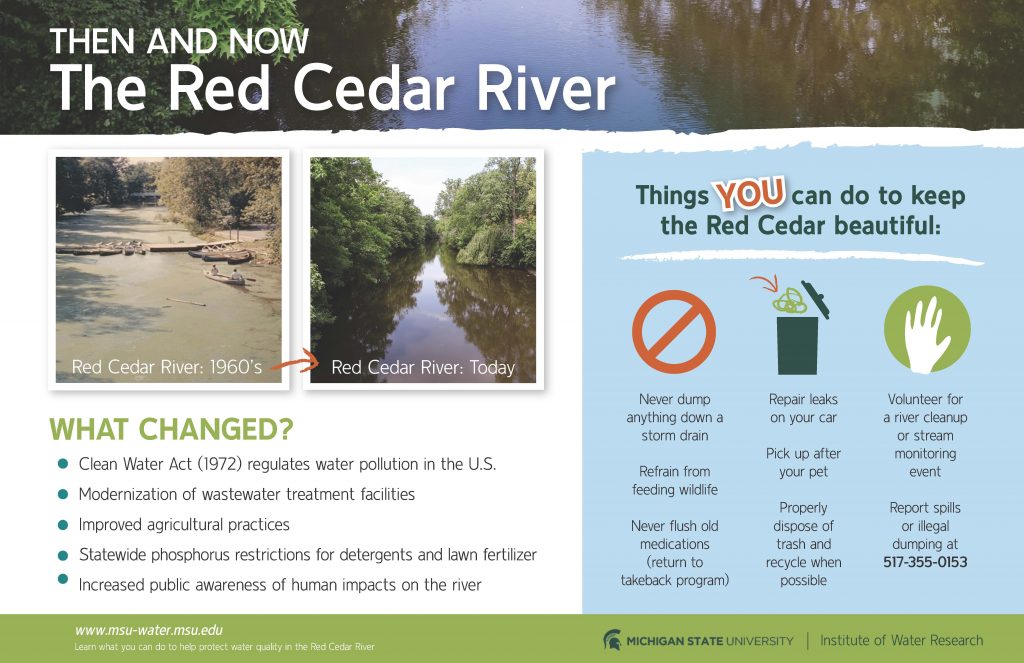
    How can I protect the Red Cedar River?

    Follow these actions to be Spartan green and keep our river clean.

    MSU-water-poster-11x17-jpg-1024x663
    Where can I fish on the Red Cedar River on MSU's campus?

    Per University Ordinance 37.01 Guidelines and Fishing Boundaries: Only catch and release fishing is permitted on campus, and individuals must maintain a current fishing license from the Michigan Department of Natural Resources (MDNR) and follow all fishing regulations established by the MDNR. Fishing off any bridge is prohibited as well as along either bank between the Wells Hall Bridge and the spillway structure near the Hannah Administration Building.

    Where can I report spills or illegal dumping that occur on MSU's campus?

    See something that’s not right in the river or riverbank? Call 517-355-0153 or email: ehs@msu.edu.

    Helpful Info

    • MSU-Water
    • MSU-Water

      Red Cedar River History Storymap

      MSU Campus Tree Map

      Beal Botanical Garden River Restoration

      Campus Natural Areas

      MSU Integrated Facilities and Land Use Plan
    • MSU Extension Programs
    • Lake and Stream Leaders Institute

      Conservation Stewards Program

      Water School
    • Relevant MSU Ordinances 
    • University Ordinance 11.00 Boating

      University Ordinance 37.01 Guidelines and Fishing Boundaries
    • MSU Committees that Address the Red Cedar River
    • Red Cedar River Stewardship & Recreation Committee

      MSU Stormwater Committee 

      Campus Landscape Stewardship Committee

      Campus Natural Areas Classroom, Curriculum and Conservation Committee
    • Archived Projects and Reports
    • Red Cedar River Restoration Phase I Overview (MSU Infrastructure Planning and Facilities, 2019)

      Freshwater Mussel Surveys of Great Lakes Tributary Rivers in Michigan (Michigan Natural Features Inventory, 2003)

      Red Cedar River Watershed

      Stormwater Walking Tour