When Terry Link arrived at Michigan State University as a faculty librarian, he was not planning to launch a dedicated sustainability office. But over time, through committee work, campus collaboration and a growing sense that environmental issues needed a clearer home, Link helped build what would become a defining part of MSU’s approach to sustainability.
As the inaugural director of MSU’s Office of Sustainability, Link spent nearly a decade helping guide the university’s efforts while also contributing to broader conversations taking place at institutions across the country. Today, he remains active in sustainability work in the East Lansing community.
Building a foundation for sustainability at MSU
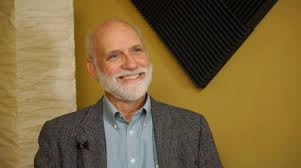 By the early 1990s, Link had become active in campus governance and was serving on the University Committee for an Academic Environment. The committee was not specifically focused on environmental issues, but it became a place where those concerns often landed.
“It wasn’t really about the environment, but they didn’t have any other place to send issues related to the natural environment,” Link said.
That early experience helped reveal both a gap and an opportunity. In 1999, during a debate in the Academic Council, Link argued against ending the committee and pushed for a group that would more directly address the university’s environmental challenges. Though that motion failed narrowly, the discussion led to something new.
Afterward, Link gathered a small group and proposed the University Committee for a Sustainable Campus.
“It was intentionally made up of undergraduate students, graduate students, faculty and operations staff,” he said. “Everybody had voice.”
That structure became central to the work that followed. Rather than approaching sustainability from one angle alone, the committee brought together perspectives from across the institution and began building a broader culture around the idea.
Connecting ideas to operations and action
The committee’s early work was grounded in learning how the university functioned in practice. It created a university-wide seminar that brought in campus leaders responsible for areas such as the power plant and solid waste, asking them to explain how systems worked and where challenges existed.
“We asked whoever was in charge on campus at places like the power plant, solid waste, ‘Give us your view on where things were, how things worked,’” Link said.
Outside experts also helped widen the conversation, adding national perspectives on issues such as energy and water. That effort soon helped MSU secure a U.S. sustainable development grant, one of 27 proposals selected for funding, according to Link. The award supported the university’s first environmental footprint benchmarking and led to MSU’s first campus sustainability report in 2003, followed by another in 2007.
For years, the work moved forward with limited resources. At first, there was no paid staff, and Link split his time before eventually moving fully into the director role. Even so, the effort began producing visible results.
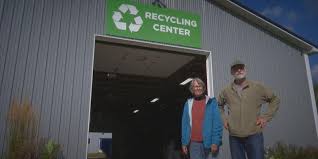
“We convinced the university to build a new recycling facility … eventually we started our first solar installation and fostered the first green roof,” Link said.
Some of the work was more informal, but no less committed.
“We drove all through campus, 2-4 a.m., noting buildings and floors where lights were on … and how we could get them turned off!” he said.
Expanding the meaning of sustainability
As reporting lines changed over time, the collaborative nature of the work remained intact. Link said the committee operated by consensus and continued to bring people together to study issues, host speakers and explore emerging ideas.
“We operated by consensus,” Link said. “Everybody had voice, and we developed programs, studied, brought in speakers … as many cutting-edge things as we could think about.”
For Link, sustainability was never limited to environmental concerns alone. From the beginning, he saw it as environmental, economic and social — and deeply connected to participation, trust and shared decision-making.
“Who decides what we want to sustain? Where’s the voice, where’s power?” he said.
That approach led the committee to explore not only waste, water and energy, but also topics such as pay equity, health and the lived experiences of students and employees. The work, Link said, depended on relationships strong enough to support honest conversation.
“Part of the work was building an understanding that healthy relationships are based on trust,” he said. “You have to be transparent, willing to listen, willing to take criticism.”
Creating influence beyond campus
MSU’s early move into a formal sustainability office drew attention from peer institutions. Link said the university’s work as the first Big Ten school to begin a dedicated effort led to invitations to speak with other campuses and participate in conferences and consultations across multiple states.
Recognition followed, but Link said the real value was in the people doing the work together.
“We got national recognition for doing some cutting-edge things,” he said.
He was quick to credit the colleagues who supported the effort and shared in its direction.
“It was the trip itself,” Link said. “It was building relationships, rolling your sleeves up and working through a goal bigger than yourself.”
Teaching also became part of that legacy. Link co-taught courses that encouraged students to challenge themselves and think differently about the world around them. Many, he said, went on to do remarkable things.
For students and early-career staff interested in sustainability, his advice remains practical: understand how systems work, identify where friction exists, and find people ready to partner in meaningful change.
“Learn how systems function, where the friction is and who is ready to partner … find the people who are passionate about it, and let their passion go,” he said.
Looking ahead while carrying the work forward
Link retired from MSU in 2009, but the culture he helped build continues to shape sustainability efforts at the university. Looking ahead, he urges thoughtful consideration of growth and its trade-offs, with greater attention to maintenance, efficiency and the people affected by institutional decisions.
The science, he said, “continues to underscore planetary limits,” making choices about energy, water, materials and travel all the more important.
For Spartans considering the future of sustainability at MSU, Link’s outlook remains rooted in stewardship and shared learning.
“Open the door, bring people in, and keep learning — together,” he said.