01 / 20
At Michigan State University’s Fate of the Earth Symposium, hosted by the Environmental Science and Policy Program (ESPP) and the Office of Sustainability, the event unfolded across plenary sessions, keynote talks and interactive discussions, with participants returning to a central idea: progress rarely arrives in a straight line, especially when environmental, social, economic considerations all intersect.
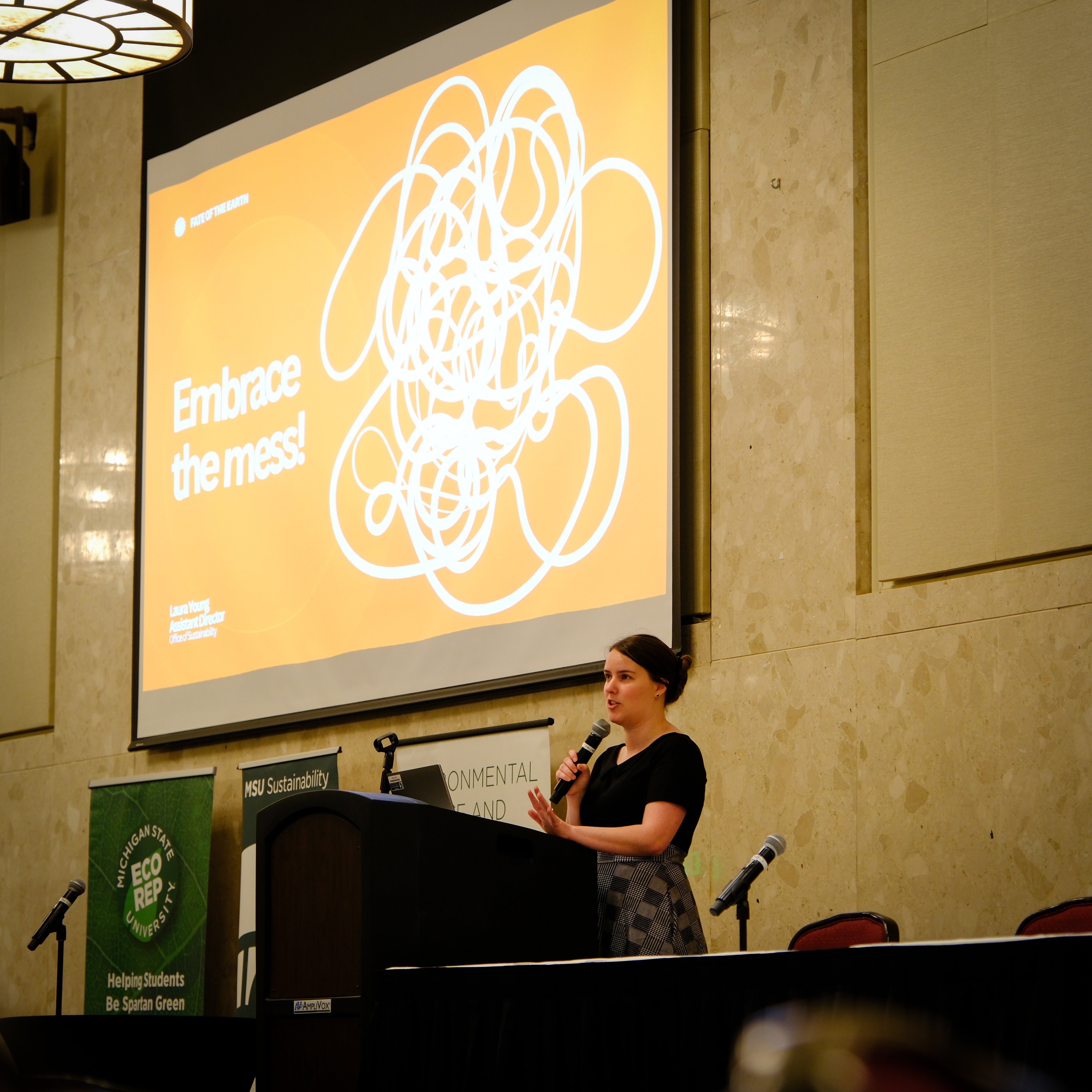
Held March 26-27 at the MSU Union, under the theme “Sustainability: Embrace the Mess!”, the two-day event brought students, faculty, staff and the community into conversation around how research, operations, partnerships and innovation can help move sustainability work forward.
“The Fate of the Earth Symposium showcased the hard work it takes to unpack the complexities of sustainability at a Top 40 university,” said Vennie Gore, executive vice president for administration. “By creating this shared space, MSU is continuing its role as a living laboratory— balancing the evolving needs of a next-generation university while protecting resources for the future.”
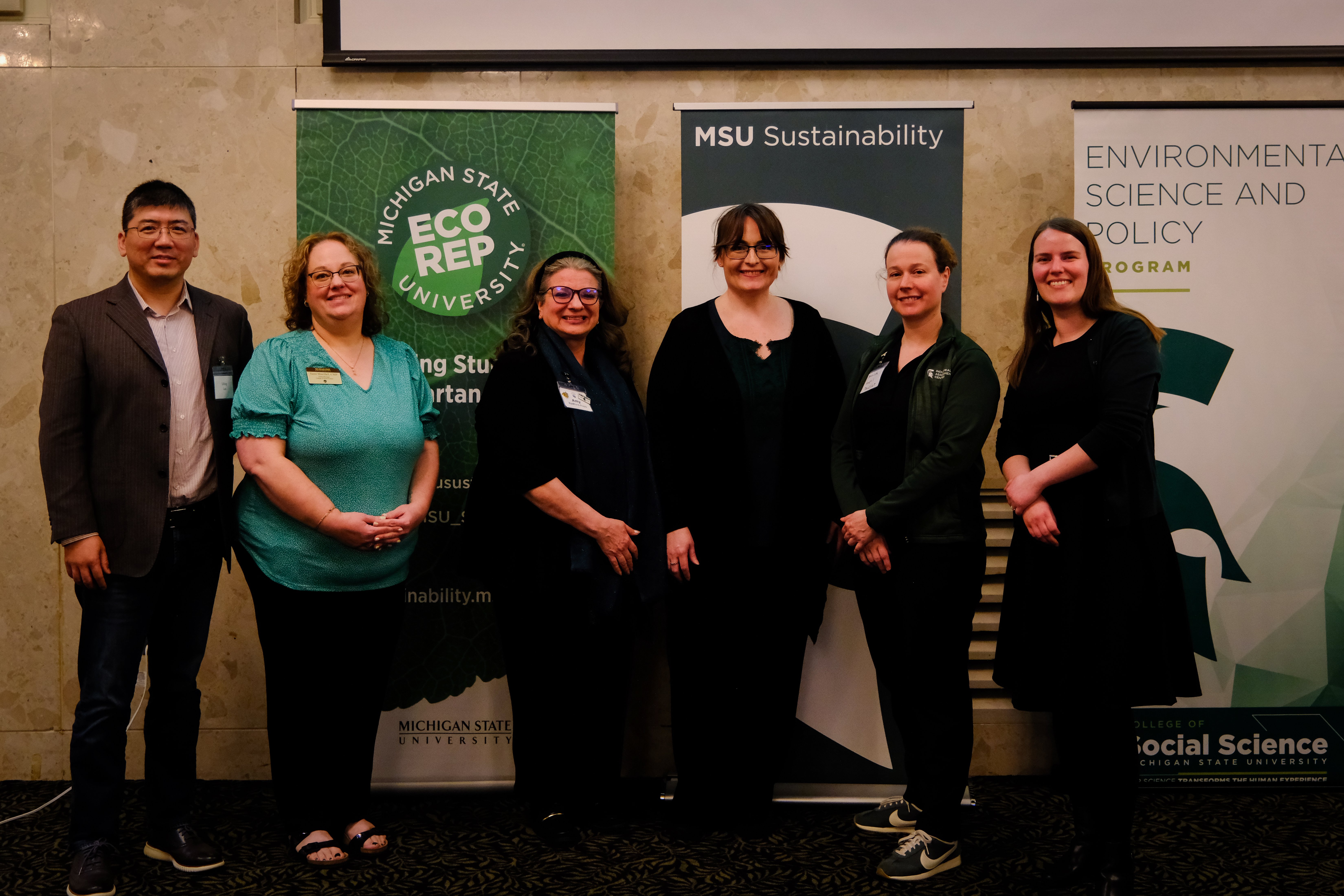
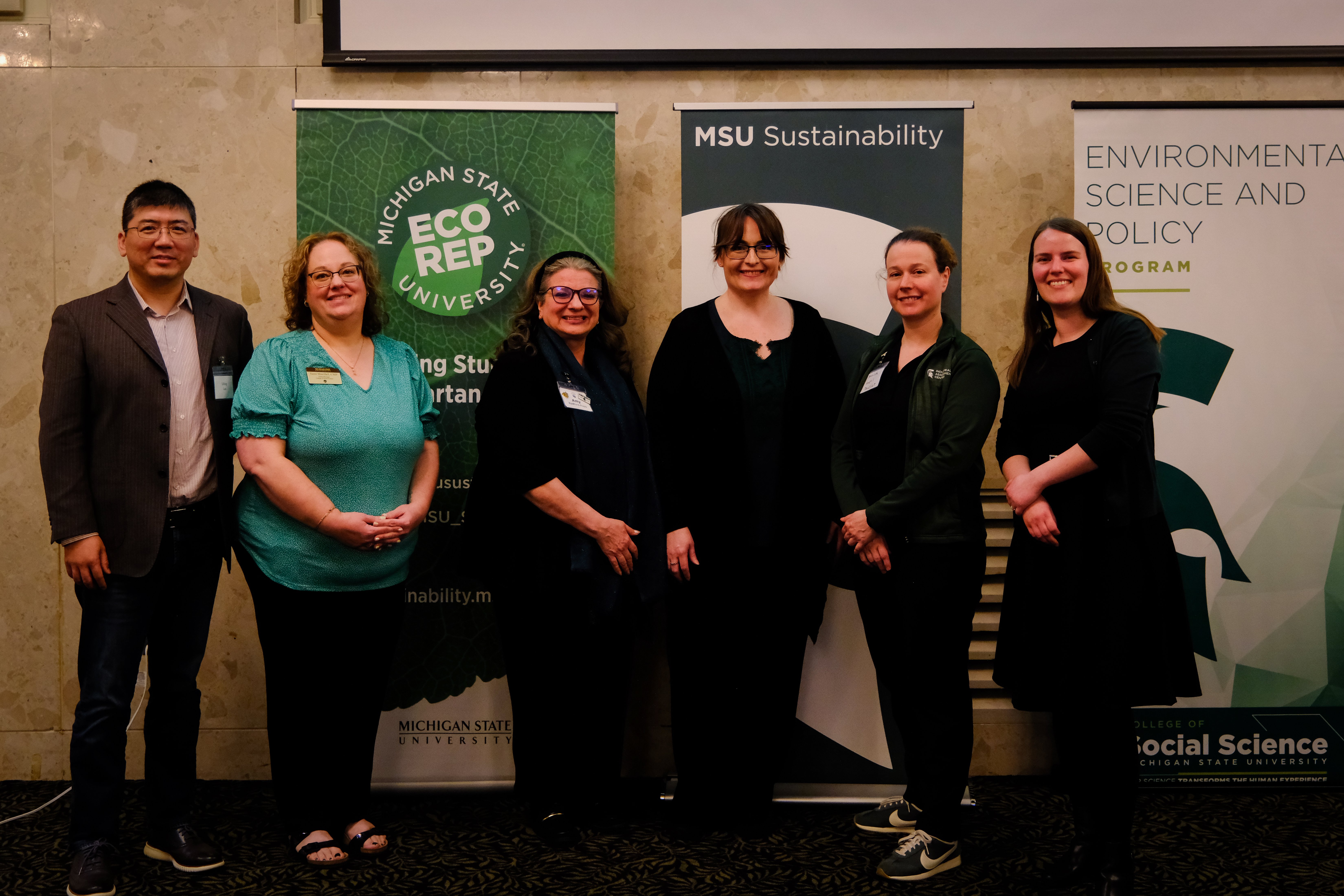
The event’s tone was set early in the opening panel, “It’s Complicated: The Real Story of Sustainability at MSU.” The plenary conversation reflected on MSU’s sustainability journey through the voices of experienced staff leaders, totaling over 120 years of experience in sustainability; with perspectives from the MSU Surplus Store and Recycling Center, Residential Hospitality Services, the Office of Research and Innovation, and the Department of Community Sustainability. Rather than presenting institutional progress as seamless, the session acknowledged the setbacks, pivots and recalibrations that often accompany long-term change at a large university.
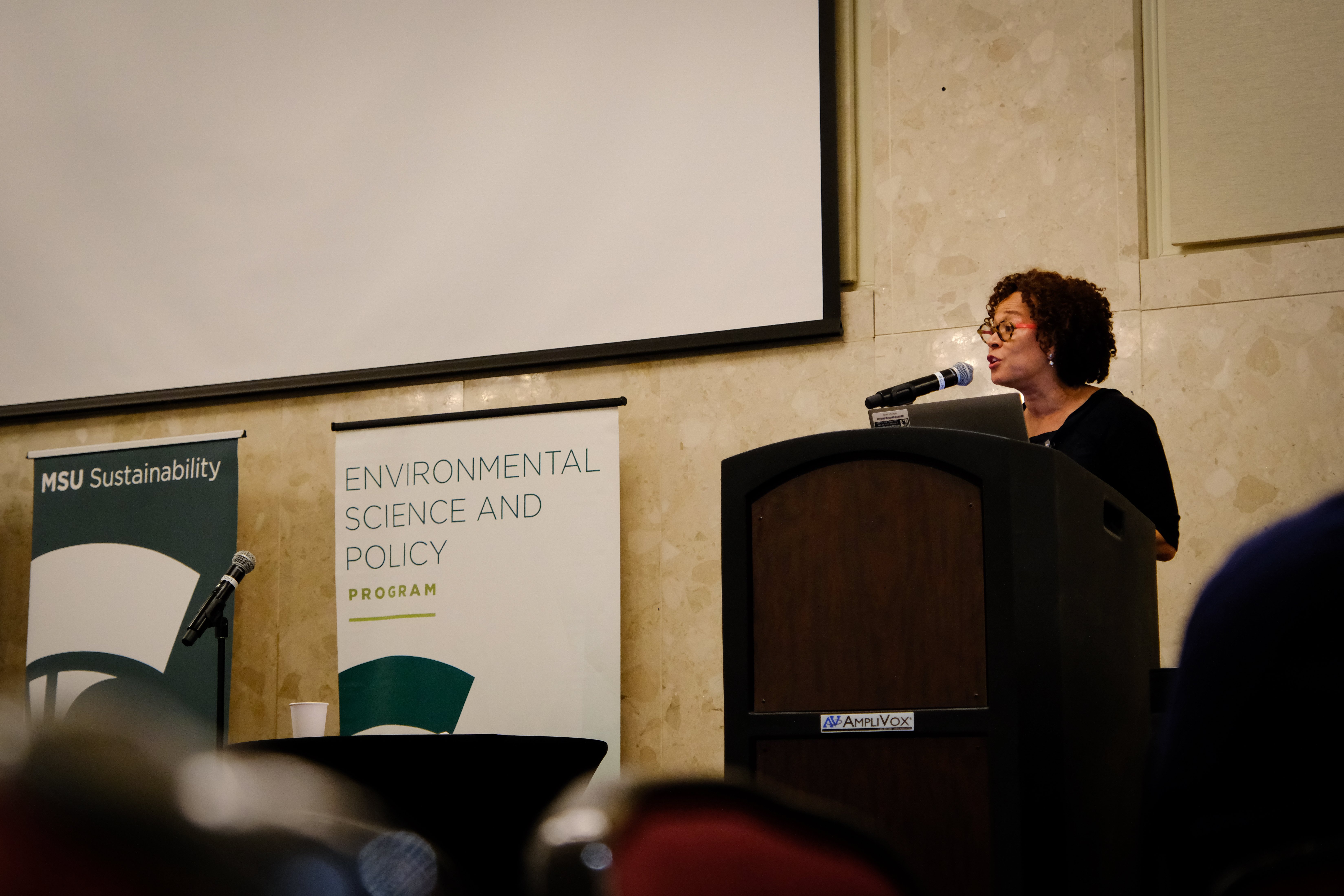
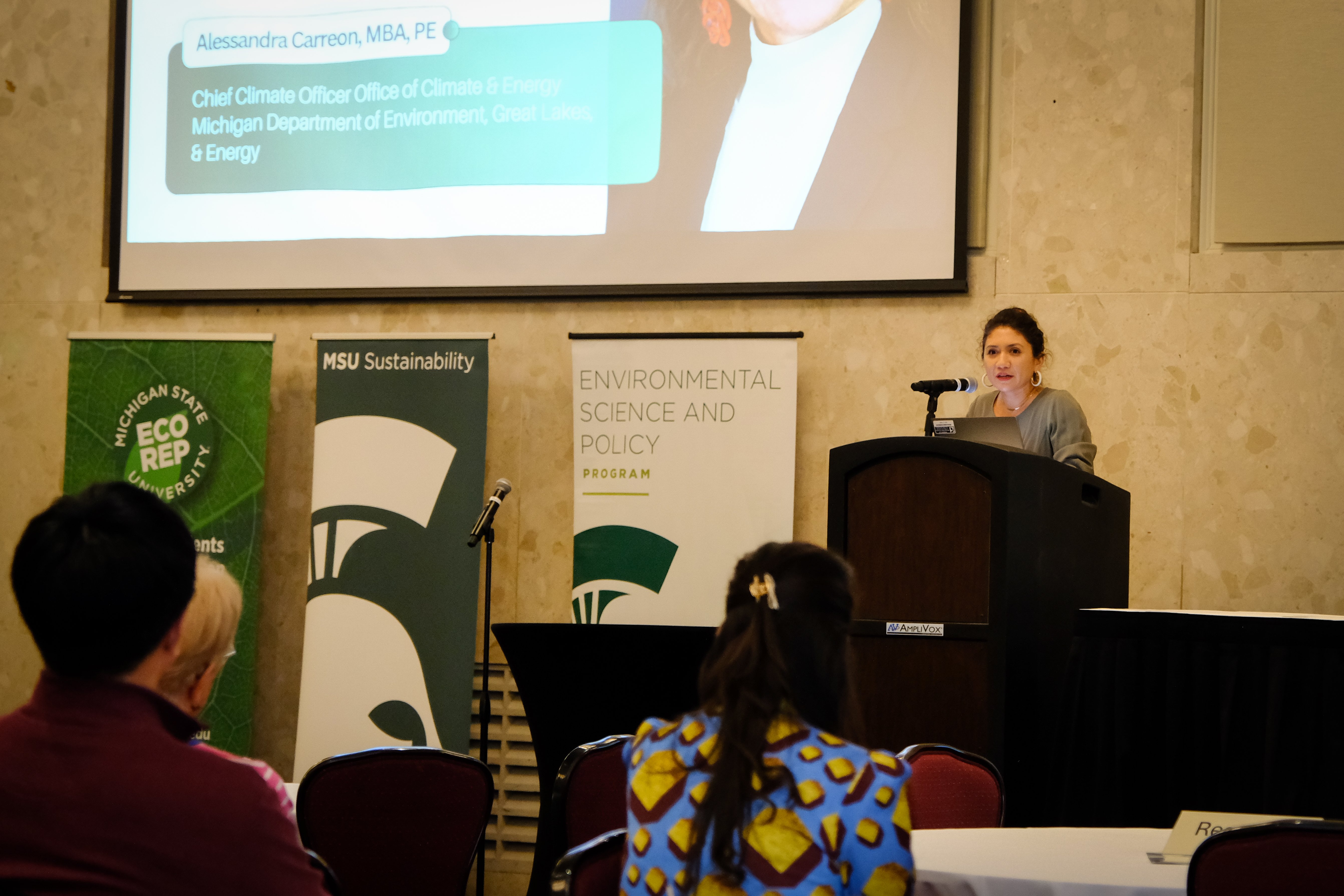
Alessandra Carreon, chief climate officer for the Office of Climate and Energy at the Michigan Department of Environment, Great Lakes, and Energy, delivered the first keynote, connecting the campus-centered conversations to broader work happening across Michigan. Later, World Wildlife Fund Senior Vice President of Climate Change Marcene Mitchell provided the closing keynote, reminding attendees that even though progress has seemingly slowed at the national level, much of the work is done is still being accomplished at the state and local level, encouraging attendees to connect their passions to sustainability, and to anticipate pivots during their career.
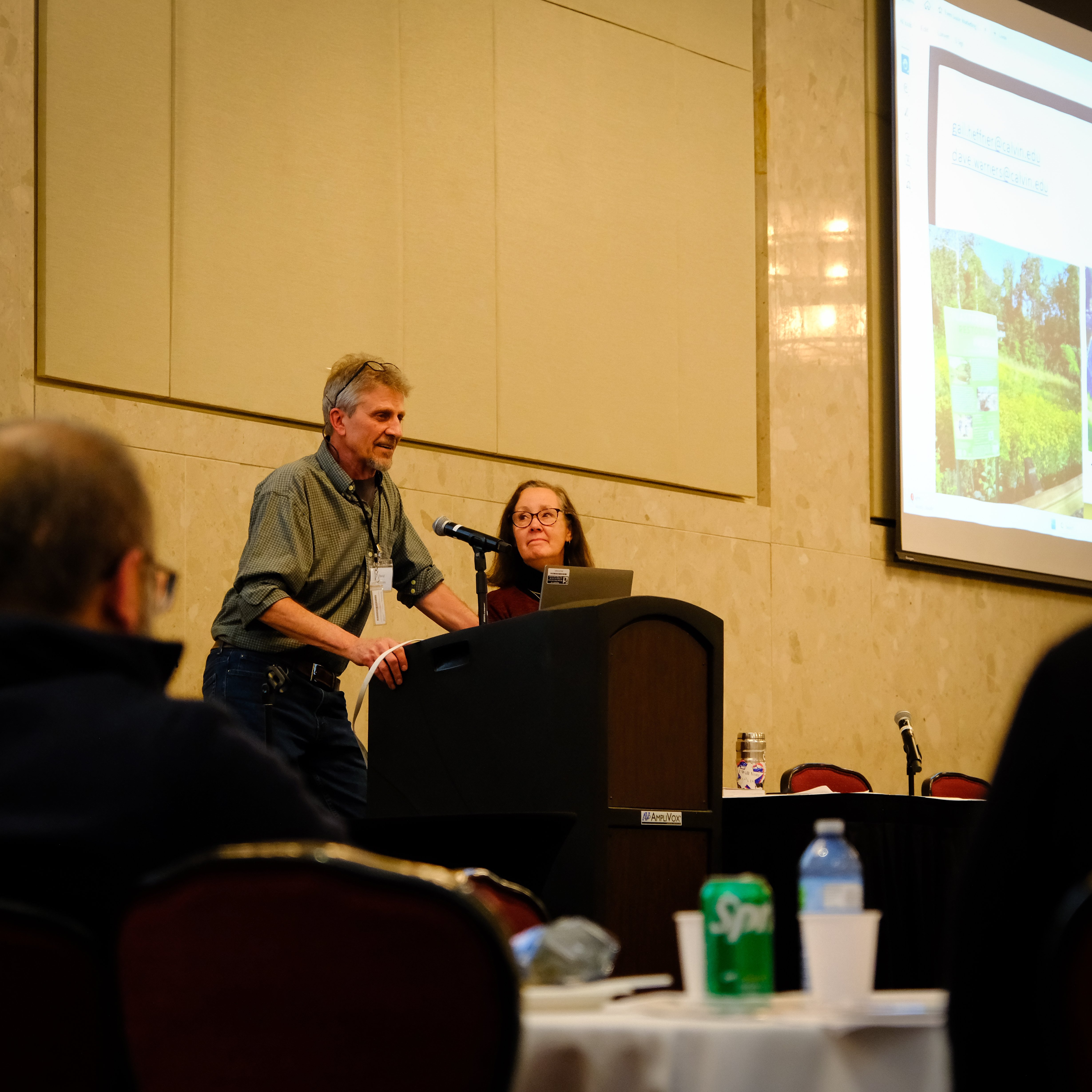
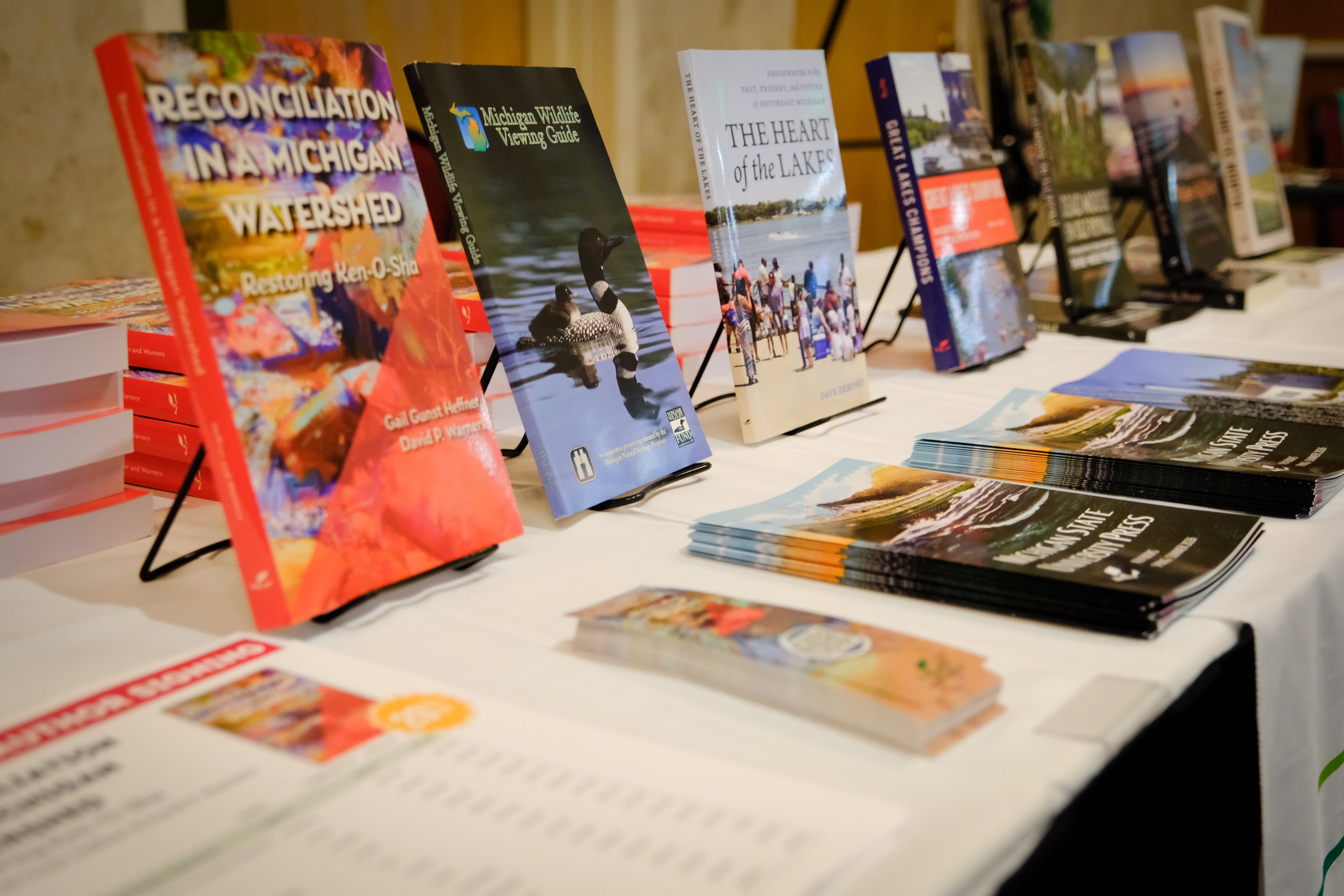
Between those keynote moments, the symposium moved through a series of conversations that underscored how interconnected sustainability work is across industries, including a lunch book-talk on “Reconciliation for a Michigan Watershed,” highlighting how we repair and heal relationships with people and the environment. Afterward, sessions on energy, food systems, natural resources and circular economy brought together perspectives from research, practice, campus operations and external partners.
“We’re immensely grateful for the opportunity to partner on this event and showcase the broader network committed to this work,” said Laura Young, assistant director for sustainability, “When we asked who was in the room, students, faculty, staff, and community partners all showed up in equal measure, and were ready and willing to sit with uncertainty and complexity. It was a powerful reminder that this work truly involves all of us.”
That same spirit carried into one of the event’s central institutional conversations, “Shaping MSU’s Sustainability Future: The Sustainability Systems Think Tank.” The session focused on work already underway to help guide MSU’s sustainability efforts through a more comprehensive framework, while balancing the realities of a complex university.
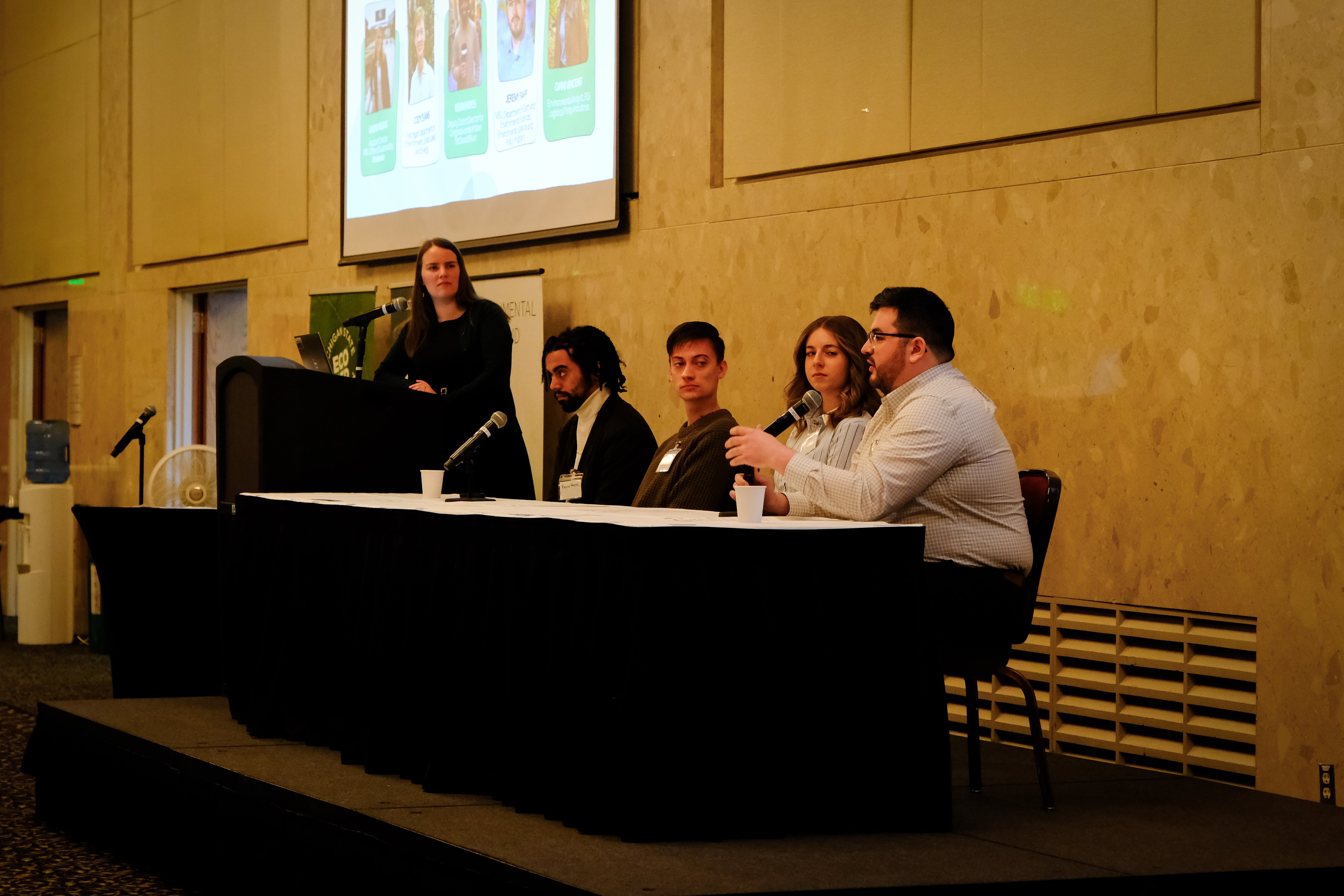
On day two, the conversation turned more directly toward students, alumni, and perspectives from industry leaders. Career-focused sessions highlighted life after graduation and the range of paths available in sustainability work, drawing attention to the relationships, mentorship and lived experience that often shape the field in areas like state agencies, doctoral research, and large organizations.
“Sustainability is fundamentally about our present actions, but it is even more about the future, making students the most vital stakeholders in our planet's health,” said Lifeng Luo, professor and director of ESPP, “By involving them in the Fate of the Earth symposium, we hope to give them the hands-on experience and confidence needed to lead the next generation of environmental change. Their fresh perspectives help experts create better solutions today, ensuring a more stable and thriving world for everyone tomorrow.”
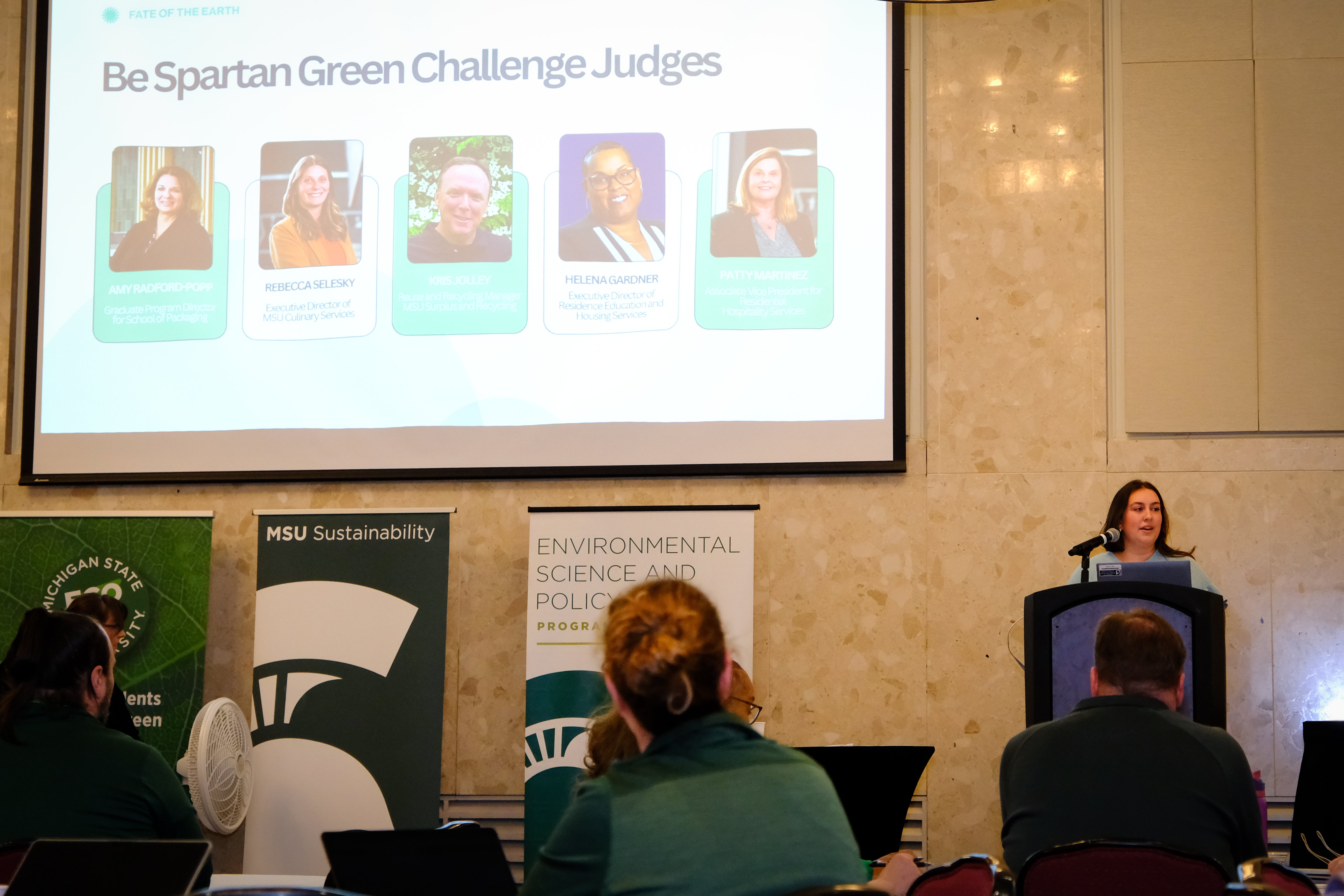
The student-centered activities came into focus during the Be Spartan Green Challenge. Designed to generate bold, practical ideas for reducing waste in residence halls and campus dining spaces, the competition gave student finalists the opportunity to present solutions that were rooted in their everyday experiences.
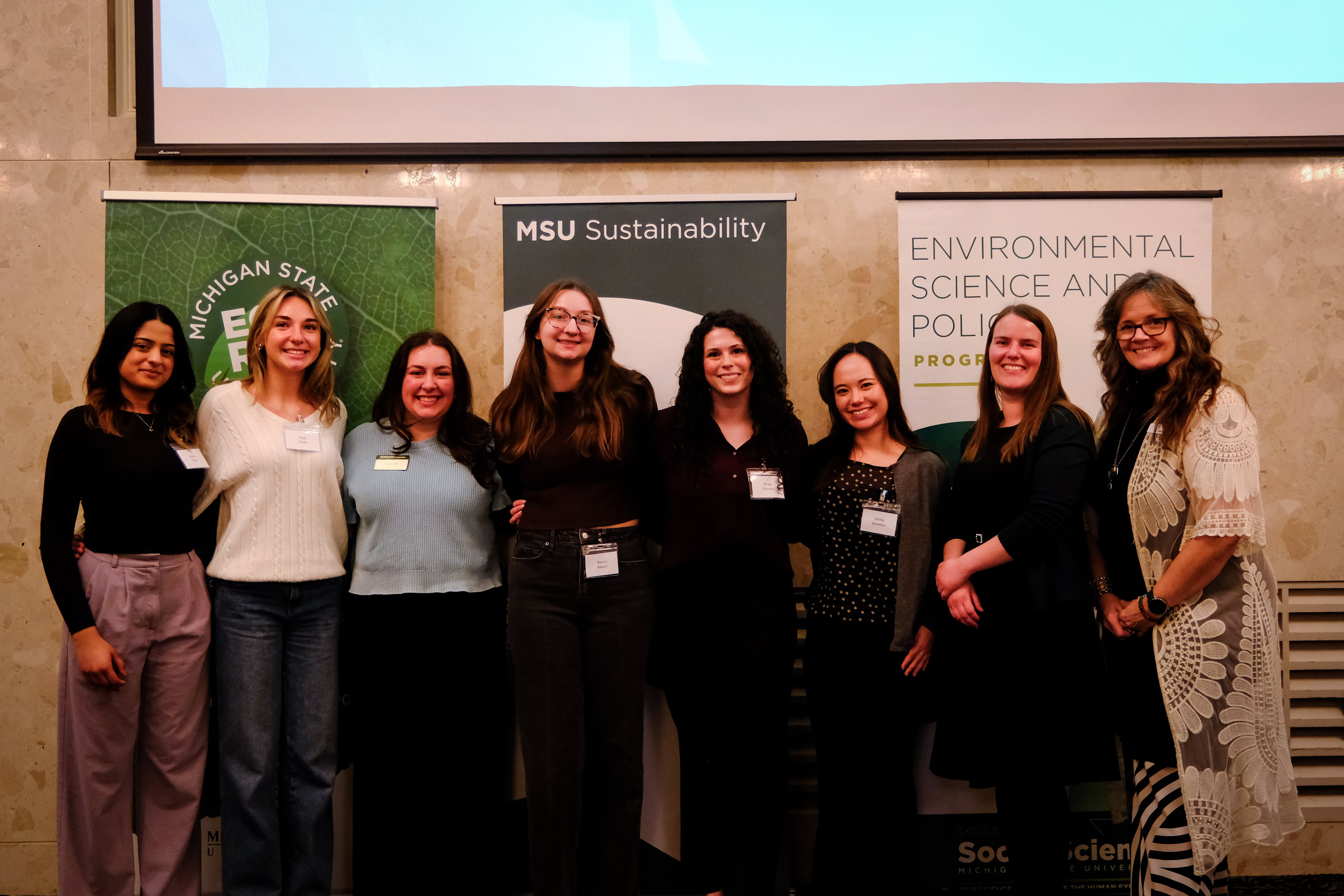
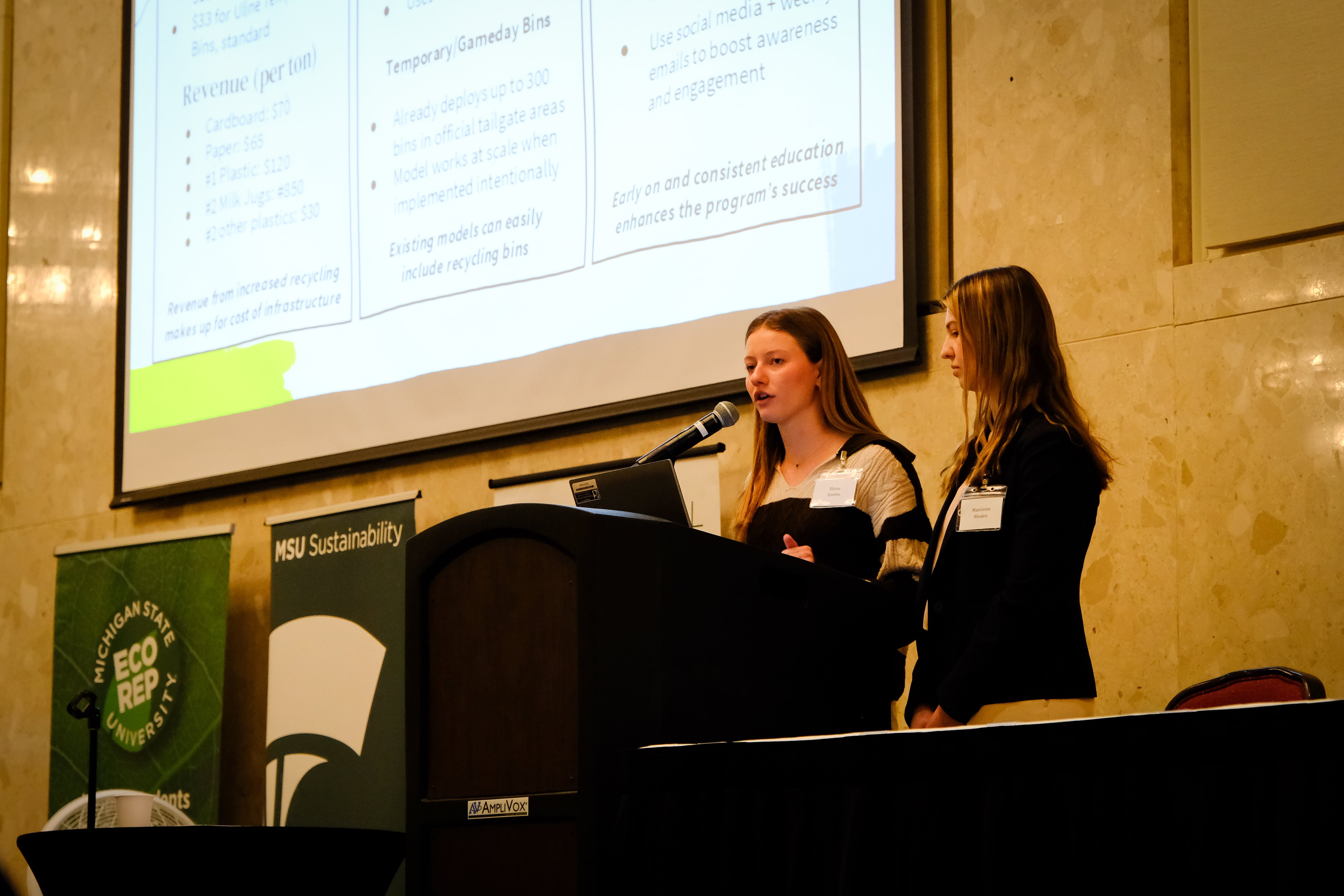
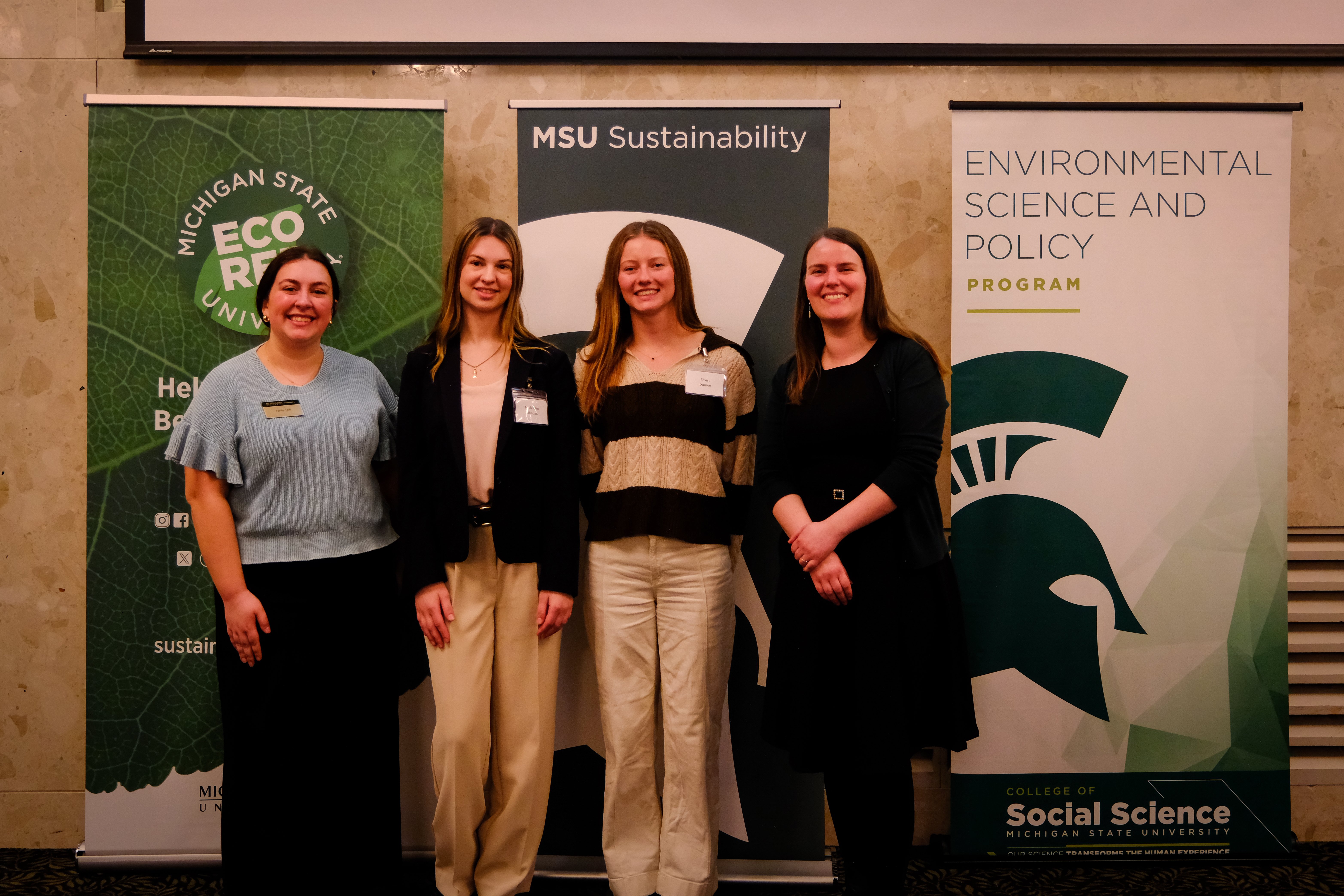
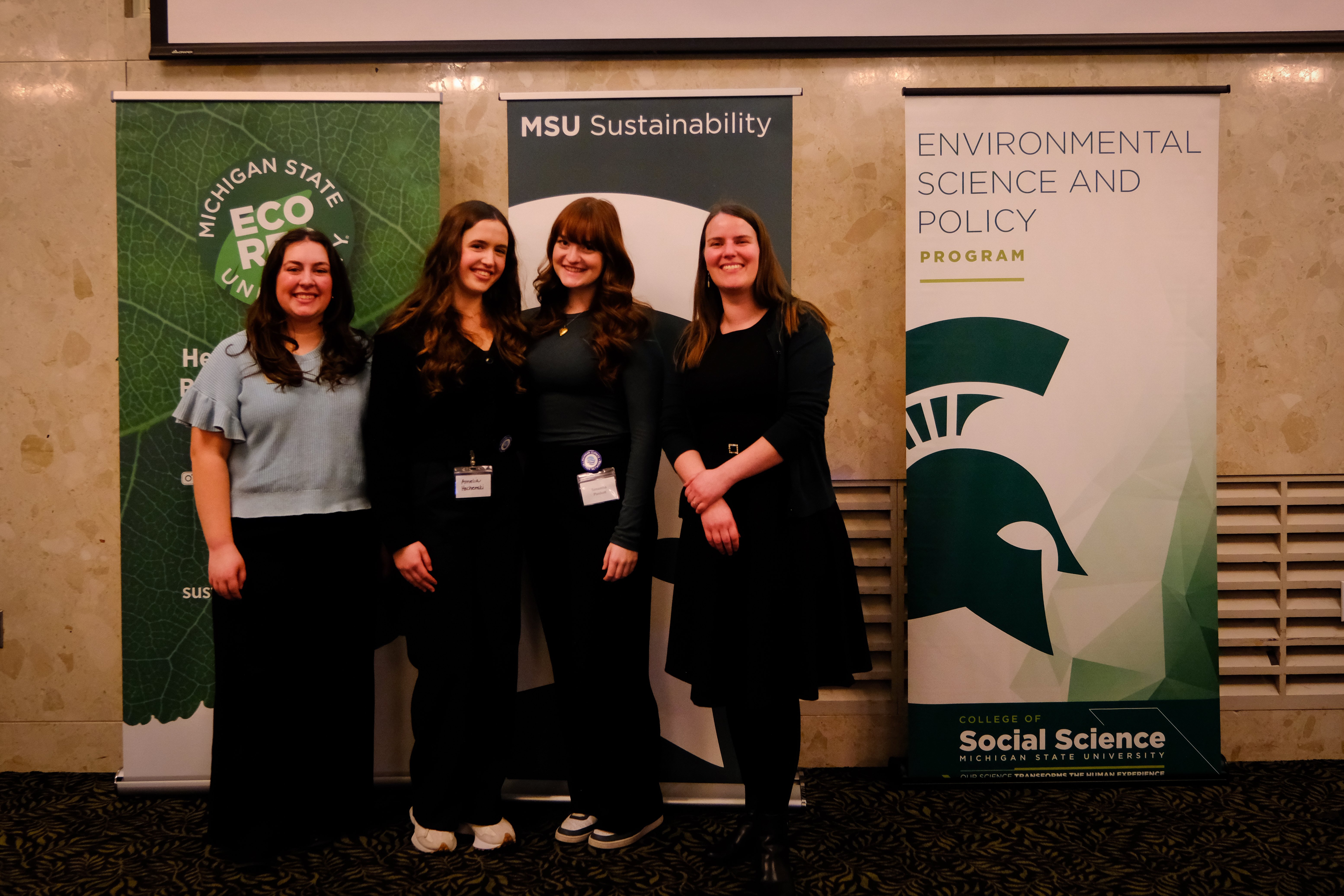
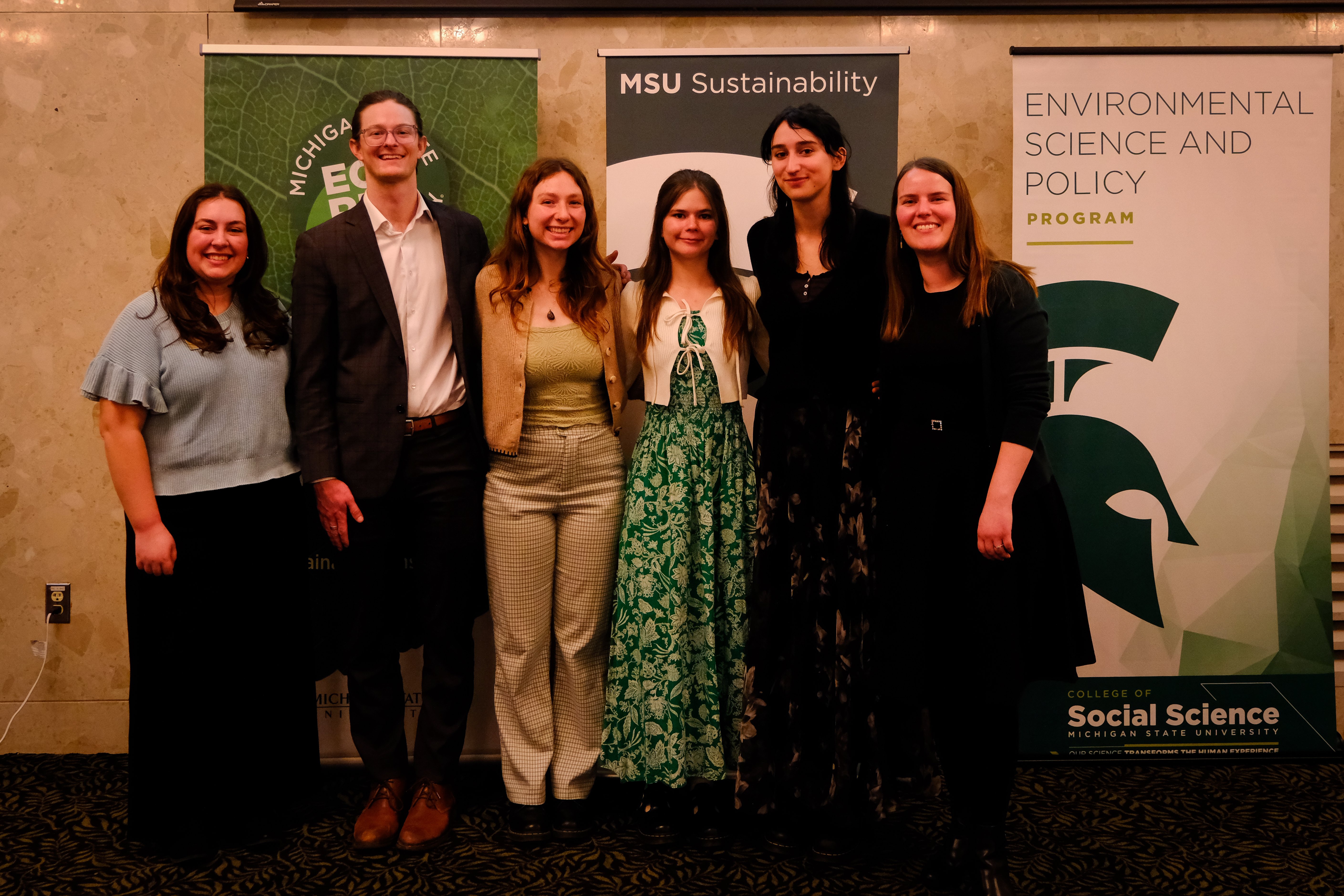
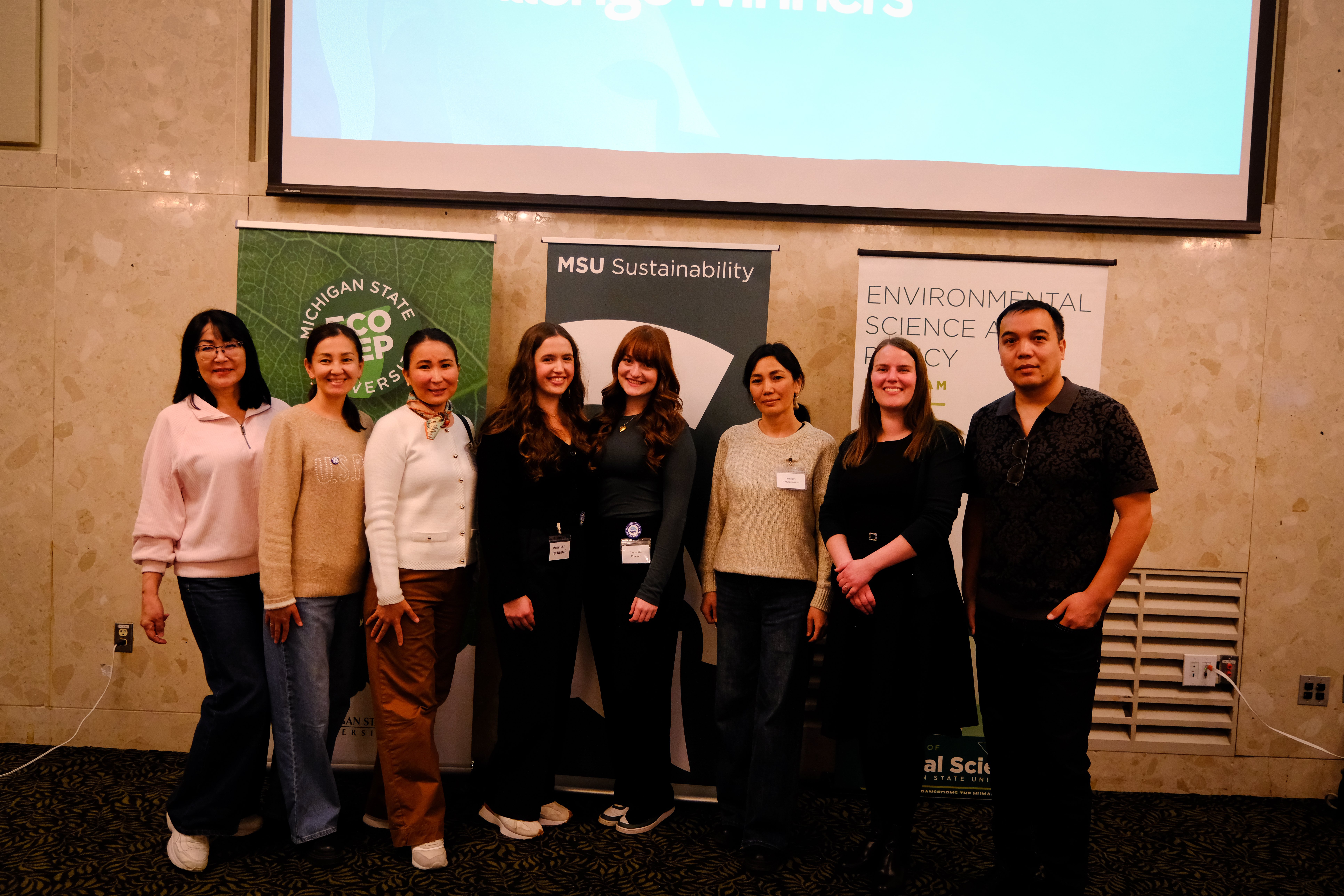
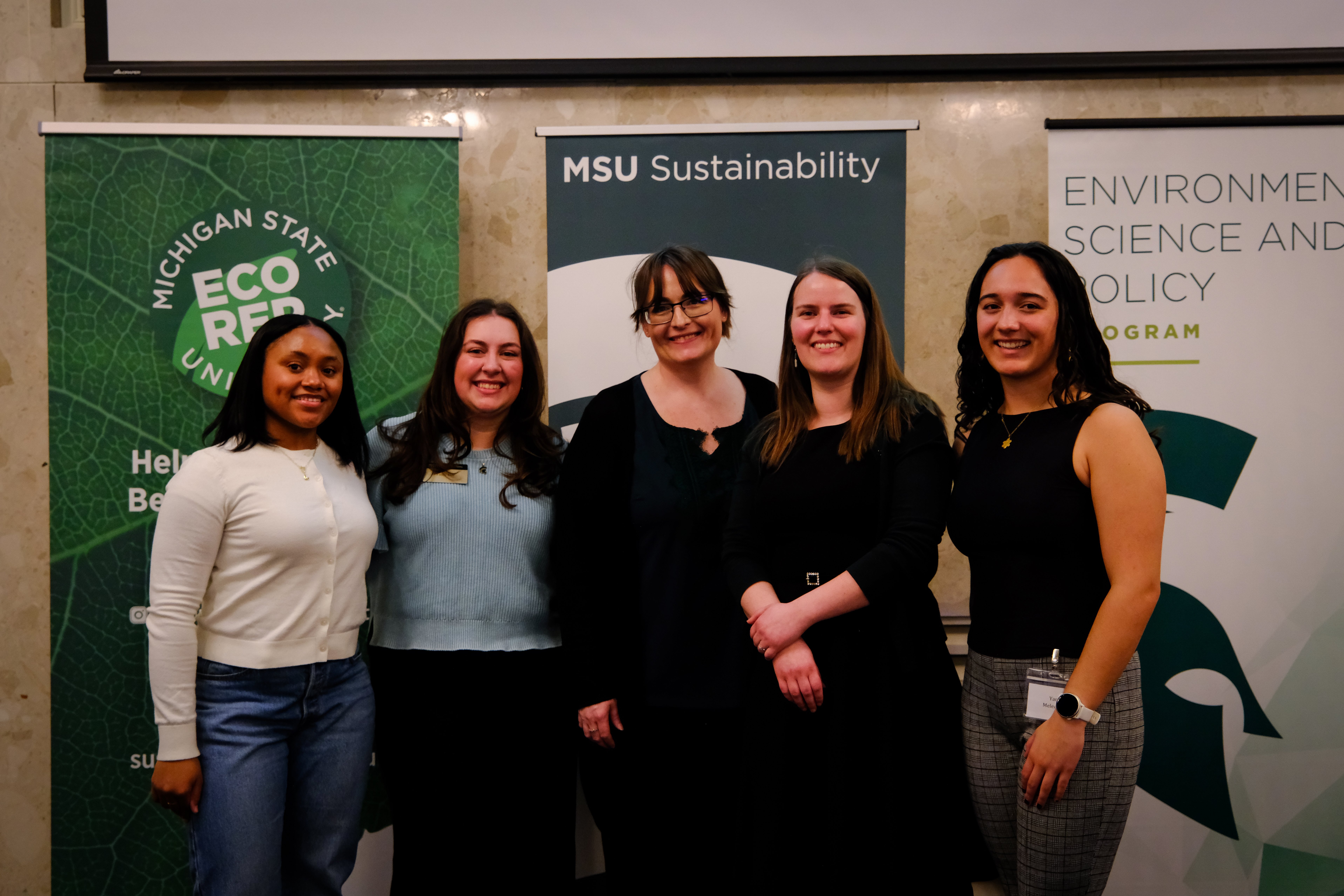
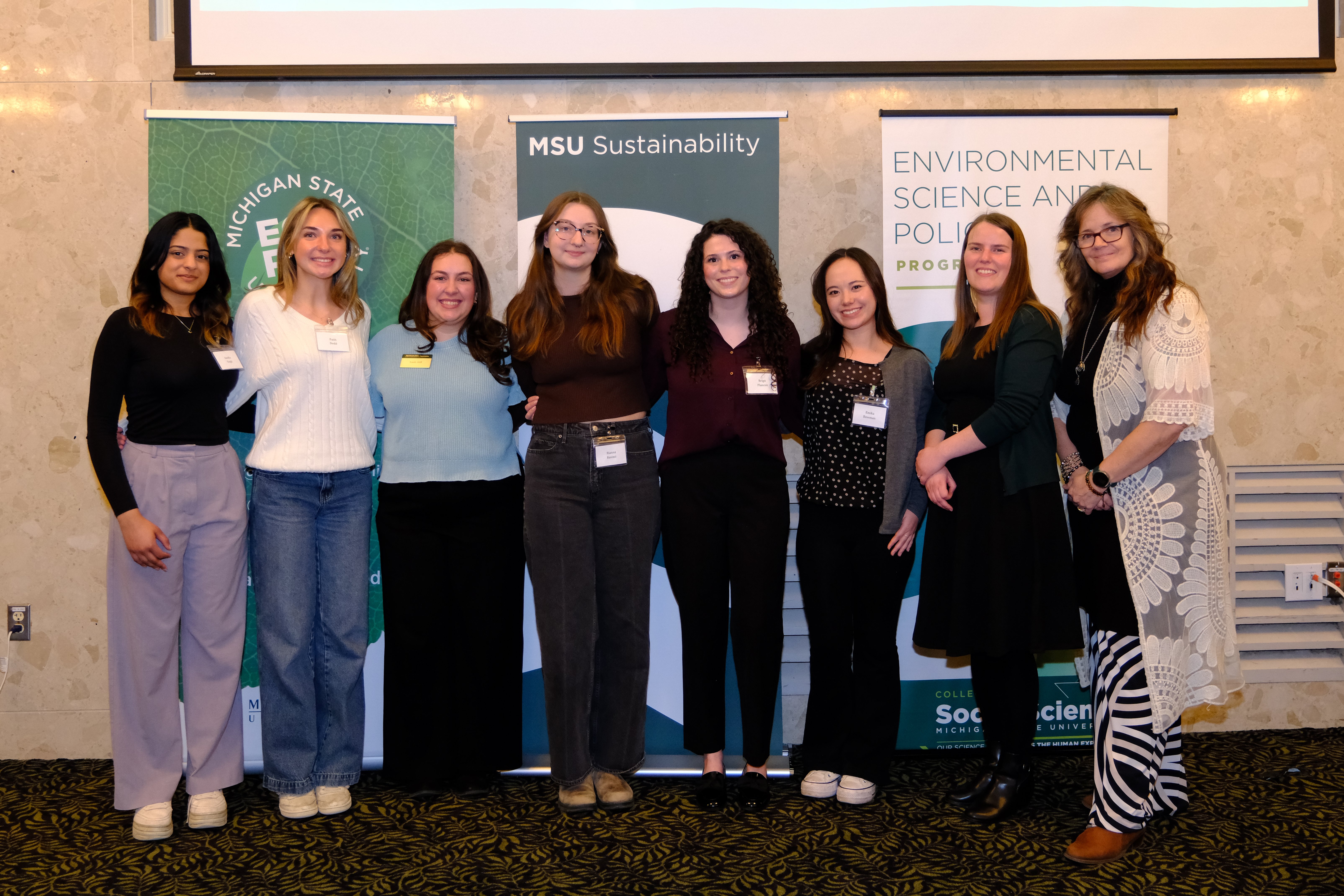
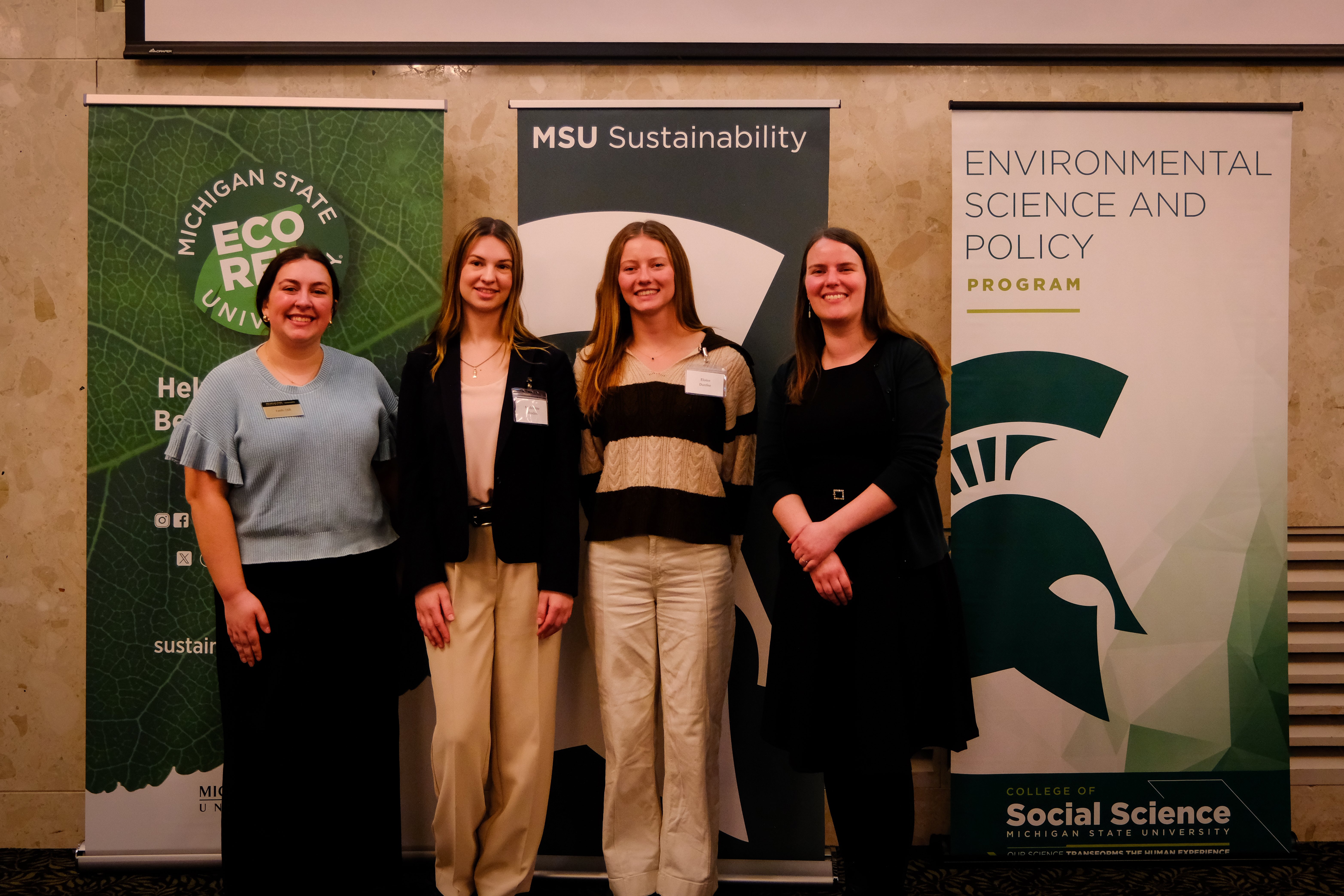
Brigit Plancon, Rianna Rasizzi, Luke Benson, and Emika Bowman, all members of the RHS Eco Rep Fellowship, placed first for their idea about turning old residence hall trash collection rooms into recycling rooms. Second place winners Eloise Dunfee and Madeleine Rhoden presented on their waste management program coined, “Right There Recycling,” an initiative to pair each outside trash can with a recycling bin to aid in the convenience of recycling for students.
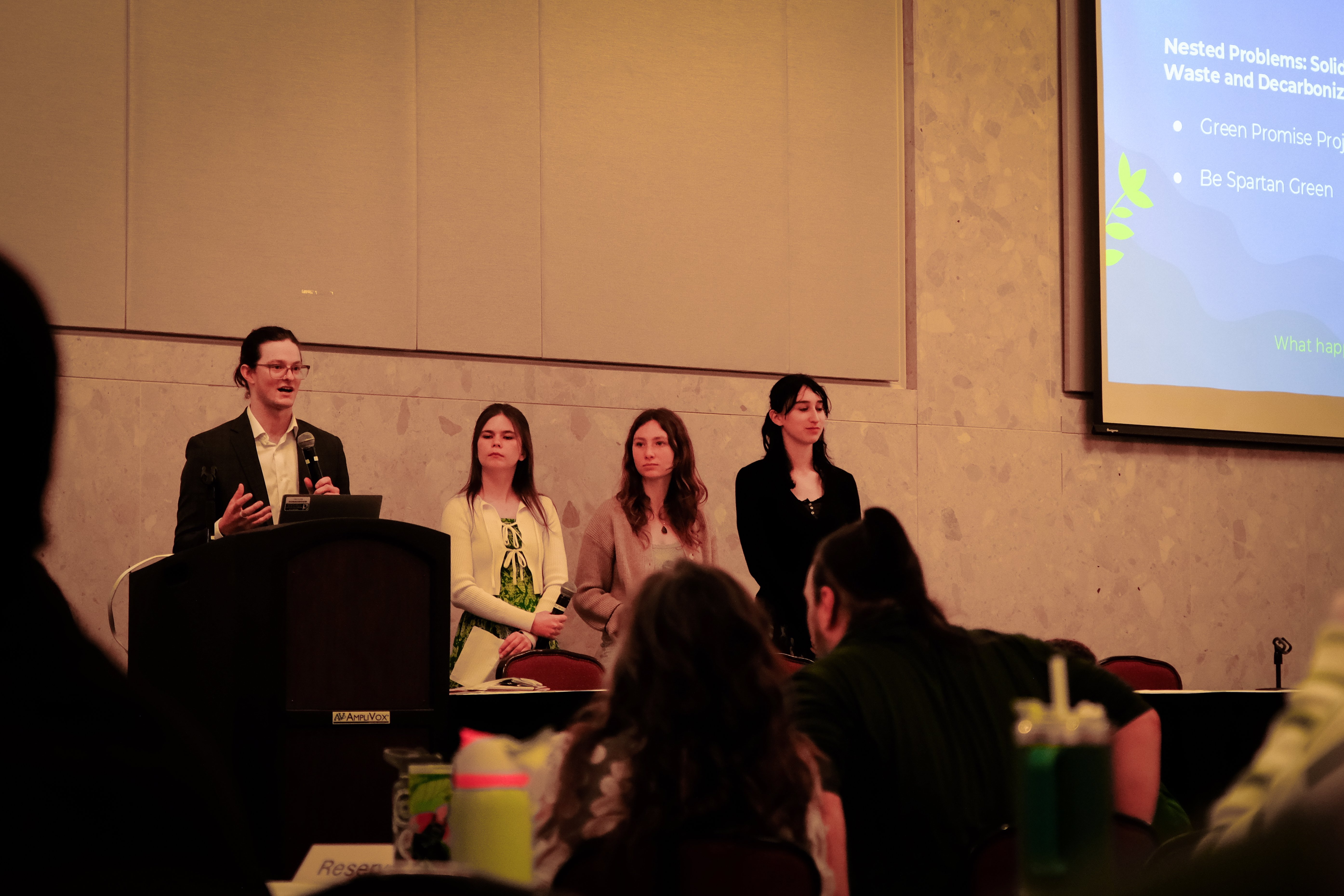
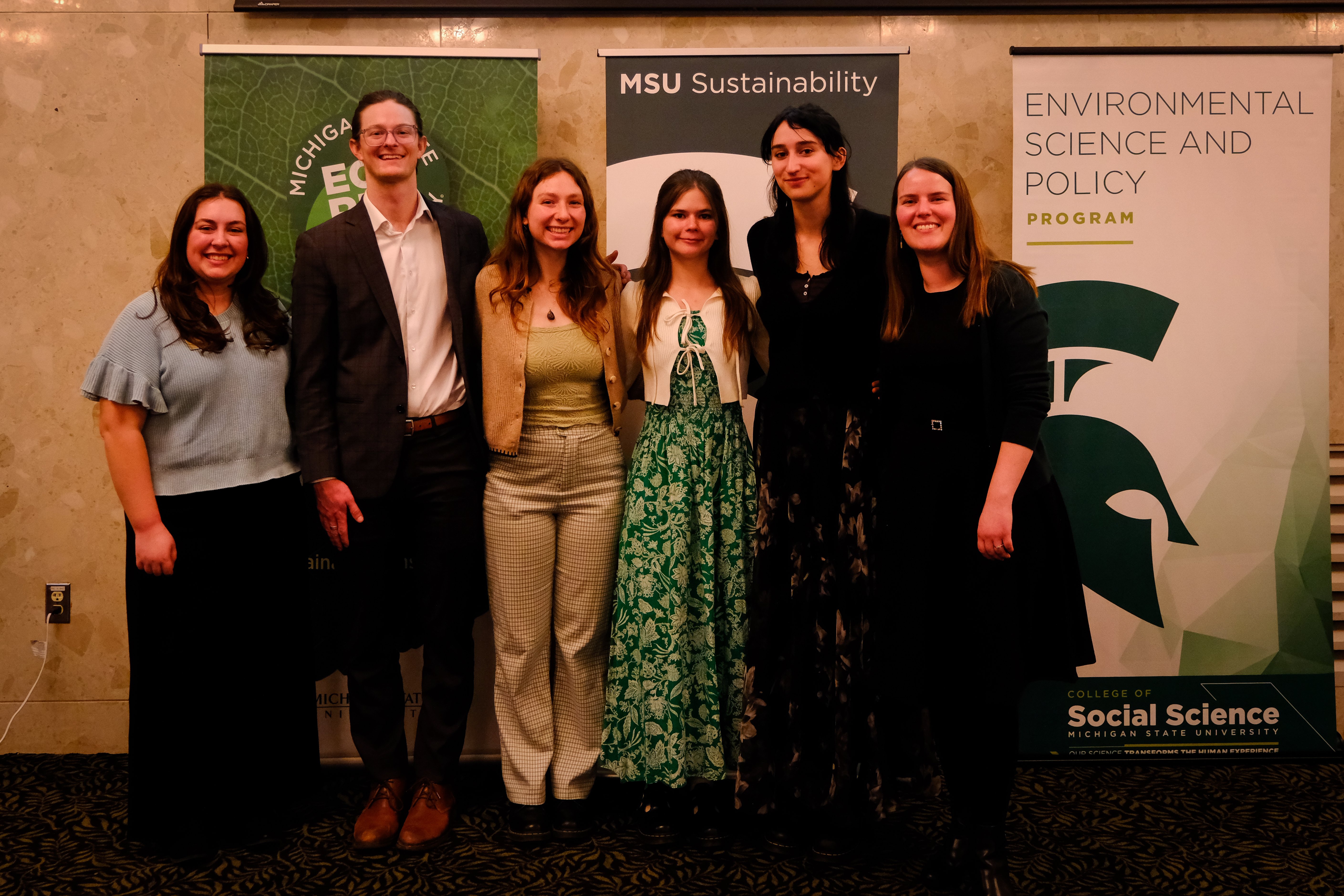
Members of the Spartan Sierra club members, Leah Willingham, Colin Reese, Mikaela Johnson, and Jenna Greene, presented an advocacy-driven plan for waste reduction and decarbonization, earning third place in the competition. A People’s Choice award went to Samantha Plunkett and Amelia Hachenski for their “F.O.O.D. for Thought” idea. This plan aimed to reduce food waste while fostering on MSU’s campus.
By the close of the event, the strongest impression was not a single session or takeaway, but the sense that sustainability is being built through conversation, experimentation and shared responsibility. In doing so, it presented sustainability at MSU not as a finished story, but as active, collaborative journey that takes shape every day.
The Fate of the Earth Symposium is made possible through the visionary support of the Fate of the Earth endowment established by Barbara Sawyer-Koch and Donald Koch. We extend our sincere gratitude for their commitment to fostering critical dialogue and advancing our collective understanding of environmental challenges and sustainability.